

TL;DR:
- Fast fashion is a business model focused on rapid, low-cost trend replication that often results in environmental waste and labor exploitation.
- Streetwear is a cultural identity rooted in community and self-expression, emphasizing authenticity, longevity, and meaningful storytelling.
You’ve probably stood in front of a rack of hoodies at some massive chain store and thought, “Is this streetwear or just fast fashion with a logo slapped on it?” You’re not alone. Understanding what is fast fashion vs streetwear is one of the most misunderstood distinctions in urban culture today. The two get lumped together constantly, but they operate from completely different foundations — one is a business model built on speed and disposability, the other is a cultural identity rooted in community and self-expression. Getting this right changes how you shop, what you wear, and what you stand for.
Table of Contents
- Key Takeaways
- What is Fast Fashion vs Streetwear: Breaking Down the Basics
- What is Streetwear: culture, identity, and style roots
- Fast fashion vs streetwear: a direct comparison
- The real misconceptions about quality and sustainability
- Practical tips for buying streetwear with intention
- My honest take on where this is all heading
- Shop streetwear that actually means something
- FAQ
Key Takeaways
| Point | Details |
|---|---|
| Fast fashion is a business model | It’s defined by rapid, low-cost production and trend replication, not by a specific style or price point. |
| Streetwear is a cultural identity | Rooted in 1990s hip-hop and skate culture, streetwear prioritizes authenticity and self-expression over trend cycles. |
| Style alone doesn’t decide the category | A hoodie can be streetwear or fast fashion depending on how and where it was made. |
| Fast fashion has serious real-world costs | Environmental waste and labor exploitation are direct consequences of the fast fashion production model. |
| Conscious buying changes the game | Knowing the difference helps you invest in pieces that hold cultural weight and last longer than one season. |
What is Fast Fashion vs Streetwear: Breaking Down the Basics
Fast fashion explained simply is this: take a trending style, reproduce it at massive scale as fast as possible, sell it cheap, move on. Fast fashion is a business model that quickly designs and produces trend-led clothing at low prices using rapid mass production methods. The goal is to get what’s on the runway or in a music video into stores before the moment passes.
The speed is staggering. Some brands operate with upwards of 52 micro-seasons annually. Newer online ultra-fast brands flip entire product lines in days, not months. That’s not fashion. That’s manufacturing on a conveyor belt.
Here’s what makes fast fashion easy to spot:
- Extremely low prices on trend-forward pieces that look familiar
- Constant new arrivals replacing entire collections weekly or even daily
- Thin materials and loose construction designed for a handful of wears, not years
- Heavy social media advertising pushing urgency around limited-time drops that aren’t actually limited
The human and environmental cost of this model is real. US landfills received 11.3 million tons of textile waste in 2018 alone, directly tied to fast fashion’s throwaway nature. Beyond waste, fast fashion pressures workers with unstable jobs and poor wages as brands squeeze suppliers for the lowest possible costs and the fastest possible turnaround.
Pro Tip: When a brand releases “new drops” every single week, that’s a fast fashion operation. Authentic streetwear drops are intentional, often limited, and spaced out because production actually takes time.
Fast fashion is not inherently a look. It’s a system. And that distinction matters more than most people realize.
What is Streetwear: culture, identity, and style roots
Streetwear is not a trend. It’s a language. Streetwear emerged in the 1990s among urban youth tied to hip-hop culture and skateboarding, two communities that were building their own visual identities outside of mainstream fashion’s approval. Baggy jeans, graphic tees, chunky sneakers, and bold hoodies were not just clothes. They were statements about where you came from and who you ran with.
The cultural DNA of streetwear was always about self-expression and community recognition. When you rocked a specific brand or colorway back then, it carried social meaning. People in your neighborhood knew what it meant. That context is what separates authentic streetwear from everything else.
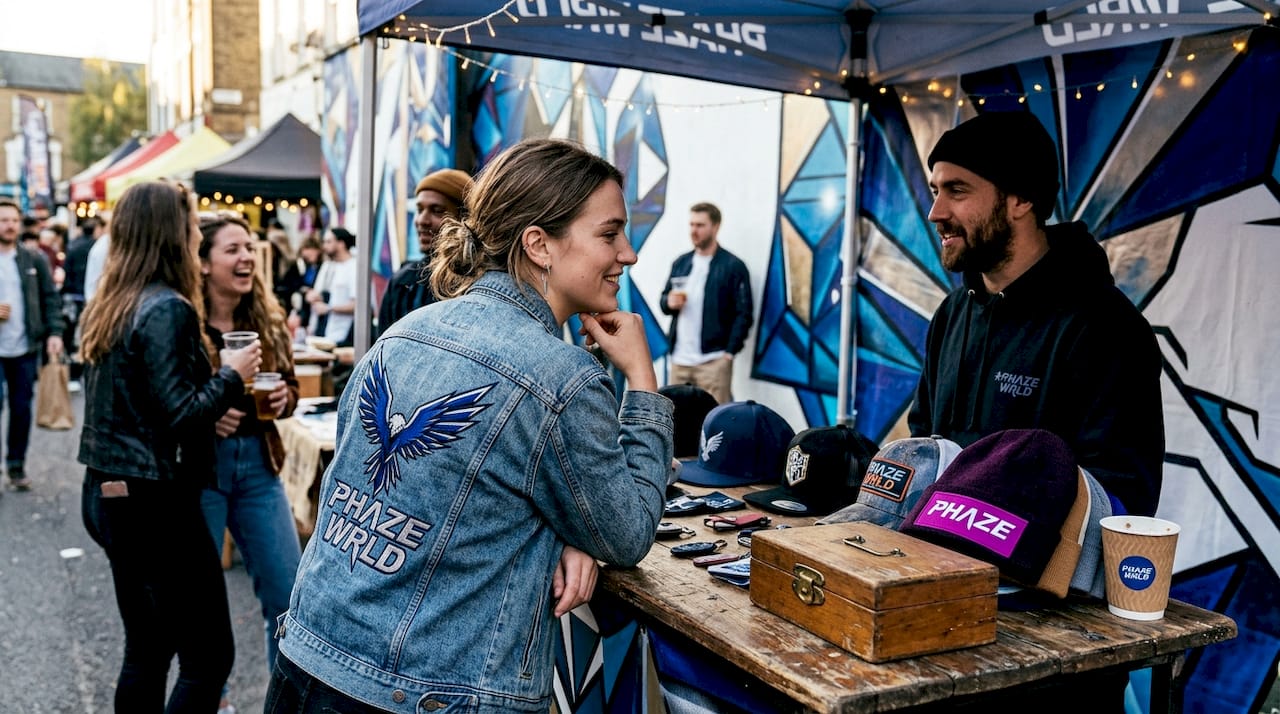
Over time, streetwear grew beyond its grassroots origins. Luxury houses started collaborating with urban brands. Celebrities made it global. But even as it went mainstream, streetwear communities kept valuing authenticity, repeat wear, and cultural storytelling over disposable trend-chasing.
What defines streetwear as a style category today:
- Comfort as priority. Oversized fits, relaxed cuts, and functional fabrics are the core aesthetic.
- Graphic identity. Bold logos, culturally charged artwork, and brand signatures communicate belonging.
- Scarcity and drops. Limited releases create cultural weight. You earned that piece.
- Longevity in the wardrobe. A well-made graphic hoodie gets worn for years. It becomes part of your identity.
- Subcultural storytelling. The best streetwear pieces reference something: a city, a music era, a movement.
Pro Tip: Check the brand equity behind a label before buying. Strong streetwear brands have consistent design language and cultural roots. Brands that simply copy aesthetics without context are operating closer to fast fashion territory even if the price tag is higher.
Streetwear is not defined by any single garment. It’s defined by intention, community, and what the piece means beyond the fabric.
Fast fashion vs streetwear: a direct comparison
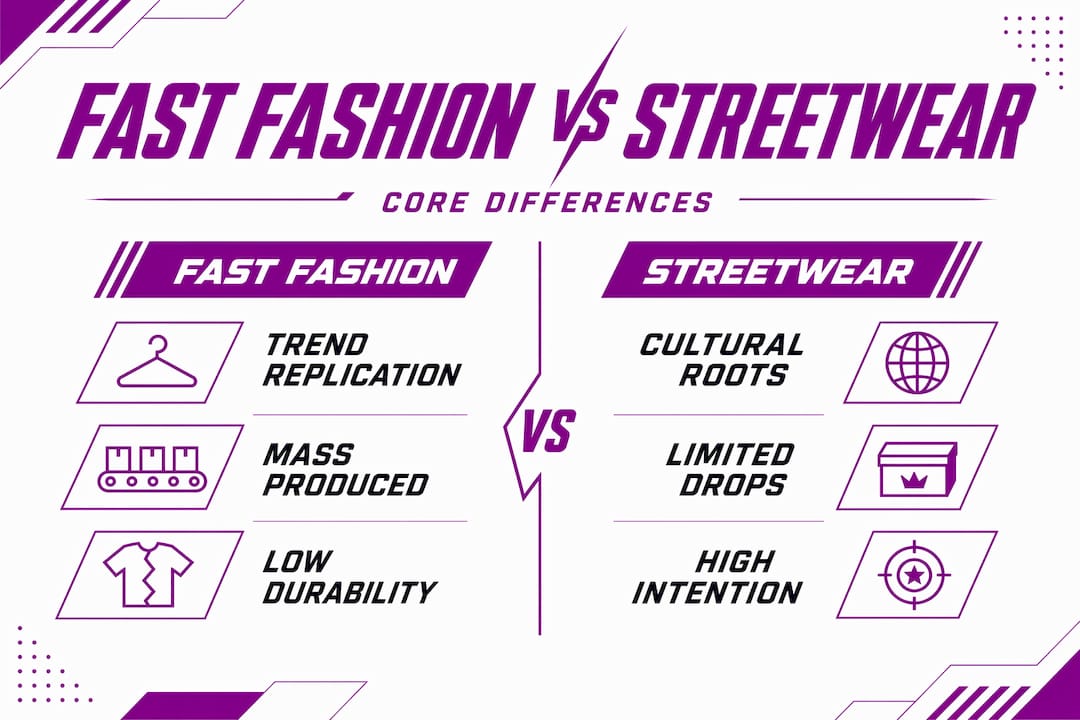
The clearest way to understand the differences between streetwear and fast fashion is to put them side by side. Here’s the breakdown:
| Category | Fast Fashion | Streetwear |
|---|---|---|
| Business model | Rapid trend replication at scale | Cultural, often limited production runs |
| Production speed | Days to weeks | Weeks to months |
| Garment longevity | Short. One to two seasons max | Long. Core pieces are worn for years |
| Cultural roots | No specific roots. Trend-reactive | Hip-hop, skate, urban youth culture |
| Consumer mindset | Disposable. Buy it, wear it, toss it | Identity-driven. Wear it, keep it, repeat it |
| Price vs value | Low price, low durability | Variable price, higher cultural and material value |
| Marketing approach | Urgency, constant new arrivals | Community drops, brand story, scarcity |
Fast fashion promotes quick purchase and discard behaviors, feeding overconsumption at a scale that streetwear culture was never built to support. That’s the core tension between the two.
Where it gets complicated is the overlap. A major fast fashion retailer can produce a hoodie that looks exactly like a streetwear staple. Visually, you might not tell the difference at first glance. But the material will fade after six washes, the stitching will loosen, and the graphic will crack. The look is there. The substance isn’t.
Streetwear style is not automatically a sign of quality or sustainability. Fast fashion is defined by how clothing is made, marketed, and sold, not by what it looks like on a hanger. A big retail chain can dress something up in streetwear aesthetics while running the same exploitative production model underneath.
The real misconceptions about quality and sustainability
This is where most conversations about fashion sustainability vs streetwear go sideways. People assume that buying streetwear means buying ethically. That is not automatically true.
Streetwear is a cultural and identity-driven category, while fast fashion is defined by rapid production and marketing cycles. These are two different axes. A brand can sell streetwear-style pieces and still operate a fast fashion model. Conversely, a fast fashion brand can occasionally produce a longer-lasting piece by accident. The defining question is always: how was this made, how fast, and by whom?
Common misconceptions worth correcting:
- “If it’s expensive, it’s not fast fashion.” Price alone tells you nothing. Some mid-tier brands charge more for pieces with the same production shortcuts.
- “Streetwear is always sustainable.” Not even close. High-volume streetwear brands with weekly drops are fast fashion regardless of the aesthetic.
- “If it looks authentic, it is authentic.” Design is easy to copy. Manufacturing integrity and cultural roots are not.
The slow fashion movement offers a useful counterpoint. Slow fashion means buying fewer pieces, prioritizing quality materials, understanding where garments come from, and wearing them for years. Many streetwear enthusiasts already practice this naturally. They buy a signature hoodie and wear it into the ground. That behavior aligns with slow fashion principles even if they never use that label.
Pro Tip: Before buying any streetwear piece, check if the brand shares information about its manufacturing process. Authentic brands with real cultural roots are usually proud to talk about how their gear is made. Silence on that front is a flag.
Knowing why streetwear prices vary across brands helps you decode what you’re actually paying for, whether it’s cultural value, material quality, or just markup on a mass-produced item.
Practical tips for buying streetwear with intention
Once you understand the difference, shopping gets much clearer. Here’s how to translate that knowledge into actual decisions at the point of purchase.
- Research the brand’s production model. Does the brand drop new styles every week? Does it share anything about its supply chain? Fast fashion operations rarely talk about where or how their clothes are made.
- Assess material before you buy. Run the fabric through your fingers. Heavyweight cotton, reinforced stitching, and quality screen-printing indicate garments built to last. Thin, scratchy fabric that pills quickly is a dead giveaway.
- Look at the brand’s cultural credibility. Real streetwear brands have a point of view. They reference a community, a city, a music movement, or a lifestyle. If a brand’s entire identity is “cheap prices and fast shipping,” that tells you everything.
- Buy less, wear more. Three quality hoodies you rotate for two years beat fifteen cheap ones you cycle through in a season. Your closet, your wallet, and the planet all win.
- Explore streetwear collaborations between brands with real cultural histories. Collabs done right reflect shared values and tend to produce pieces worth holding onto.
Pro Tip: When building a streetwear wardrobe, start with staples: a heavyweight hoodie, a solid graphic tee, and versatile bottoms. Master those before chasing trends. Staples carry cultural weight no matter what season it is.
My honest take on where this is all heading
I’ve watched the streetwear and fast fashion lines blur in real time. What I’ve learned from being close to urban fashion culture is that the loudest voices complaining about fast fashion are sometimes the same people refreshing product pages for the next mega-cheap drop. There’s a gap between what people say they value and what they actually buy.
What I’ve found genuinely encouraging is that younger consumers are starting to ask harder questions. Where was this made? Who made it? Will this last? That shift in buyer behavior is real, and brands that can’t answer those questions honestly are going to lose credibility fast.
My take on fashion sustainability vs streetwear is this: streetwear was always built on the idea that your clothes mean something. That’s the foundation worth protecting. When you buy a piece that holds no cultural weight and falls apart in a month, you’re not building a wardrobe. You’re just participating in a system that profits from your boredom.
The brands worth supporting are the ones that treat clothing like culture, not inventory.
— Phazewrld
Shop streetwear that actually means something
If this article helped you see the difference between a disposable trend and a piece worth owning, the next step is putting that into practice.
Phazewrld exists exactly at this intersection. The collections are built around urban identity, not weekly trend cycles. From heavyweight streetwear hoodies designed to last, to bold graphics rooted in street culture, every piece is made to be worn, not discarded. Whether you’re shopping men’s streetwear or exploring the women’s collection, you’re choosing pieces that carry cultural weight and are built to stay in your rotation for longer than one season. Free shipping over $99, easy returns, and price matching make it easier to shop with confidence. Own the Streets. Define the Culture.
FAQ
What is the main difference between fast fashion and streetwear?
Fast fashion is a production and retail model focused on rapid, low-cost trend replication. Streetwear is a cultural identity rooted in urban communities, prioritizing self-expression and garment longevity over disposable trend cycles.
Is streetwear considered fast fashion?
Not automatically. Streetwear describes a cultural style category, while fast fashion describes a business model. A brand can produce streetwear-style clothing using fast fashion methods, which makes the business model fast fashion regardless of how the pieces look.
How can I tell if a brand is fast fashion or authentic streetwear?
Look at production speed, drop frequency, and material quality. Authentic streetwear brands release intentional drops spaced out over time and use higher-quality materials. Fast fashion brands refresh inventory constantly and rarely discuss their supply chain.
Does buying streetwear mean I’m shopping sustainably?
Not necessarily. Streetwear is not inherently sustainable. The key is whether the pieces are made to last and whether the brand is transparent about its manufacturing process. Buying fewer, higher-quality pieces is the most practical path toward conscious consumption.
Why does streetwear pricing vary so much?
Streetwear prices vary based on brand equity, manufacturing quality, cultural credibility, and production scale. Limited drops from brands with strong cultural roots command higher prices because scarcity and authenticity are built into the product itself.