

TL;DR:
- Credibility in streetwear is earned through cultural authenticity, consistent quality, and transparent practices over time. Building genuine community connections and honest signals—like limited drops and supply chain verification—are more effective than superficial hype. Trust established this way creates lasting brand reputation and resale value, essential in a competitive market.
Hype fades. Real credibility doesn’t. Understanding how streetwear brands build credibility is one of the most misunderstood challenges in urban fashion today. Most people assume a viral moment or a celebrity co-sign is enough. It isn’t. Brand credibility is actually the accumulated result of expertise, honesty, consistency, and reliable product delivery over time. This article breaks down what separates brands that earn lasting trust from those that burn bright and disappear, covering culture-rooted authenticity, transparency tools, loyalty mechanics, and the strategies that actually move the needle.
Table of Contents
- Key Takeaways
- How streetwear brands build credibility: the core framework
- Cultural roots and authenticity: where real credibility starts
- Trust signals in the age of AI
- Creating loyalty: turning buyers into evangelists
- Staying consistent while evolving
- My take: what actually builds lasting credibility
- Wear the credibility: shop Phazewrld’s authentic collections
- FAQ
Key Takeaways
| Point | Details |
|---|---|
| Credibility is earned, not bought | Authenticity and consistent product delivery build trust far more than paid hype or influencer campaigns. |
| Culture comes before commerce | Documenting a real cultural scene before selling product creates an audience that genuinely believes in the brand. |
| Transparency is a trust signal | Honest product imagery, verified reviews, and traceability tools give customers real reasons to buy and return. |
| Loyalty programs amplify credibility | Early access, tiered rewards, and personalization convert casual buyers into vocal brand advocates. |
| Consistency protects long-term reputation | Formal quality control and a distinct brand voice resist copying and keep credibility intact as brands grow. |
How streetwear brands build credibility: the core framework
Before you can build credibility, you need to understand what it actually means in this space. Brand credibility is not the same as brand awareness. A brand can have millions of followers and zero credibility. In streetwear, credibility is the community’s collective judgment that a brand is genuine, knowledgeable, and worth their money and attention.
Brand credibility breaks down into four measurable components: expertise (does the brand understand the culture?), honesty (does it deliver what it promises?), consistency (is the quality and voice reliable?), and product effectiveness (does the gear actually perform?). When all four align, trust follows naturally.
The credibility pitfalls in streetwear are predictable, and many emerging brands fall into all of them:
- Hype without substance. Launching with a massive paid push but no cultural story or product quality to back it up. Consumers notice fast.
- Inconsistent quality. Dropping one excellent hoodie and following it with a noticeably cheaper version destroys the perception you worked months to build.
- Lack of transparency. Vague sizing, misleading product photography, and no clear return policy signal that a brand doesn’t respect its customers.
- Copying without context. Replicating the aesthetic of credible brands without understanding the culture those visuals represent. The community sees it immediately.
One underappreciated consequence of credibility loss is what happens to secondary market value. Brands with genuine credibility command resale premiums. Supreme hoodies resell at multiples of retail. That secondary market price is not just hype. It reflects the community’s belief that the brand is real and that the product is worth owning. Building brand trust in streetwear means building that belief at every touchpoint.
Cultural roots and authenticity: where real credibility starts
The most credible streetwear brands in the world share one origin story. They didn’t start as brands. They started as communities.
Palace’s credibility is the clearest modern case study. Lev Tanju didn’t launch a clothing company. He documented a London skate crew. The content came first, the community came second, and the product came third. By the time Palace dropped gear, there was already a group of people who genuinely wanted to wear it because they were already invested in the culture it represented.
Here is how to replicate that sequence intentionally:
- Document your scene first. Film the people, places, and moments that represent the culture your brand lives in. Post it consistently before you ever pitch a product.
- Build relationships before building an audience. Know the artists, athletes, and creators in your space personally. Authentic connection shows up in content in ways that paid partnerships never do.
- Choose collaborations for cultural elevation, not just reach. Strategic collaborations with culturally prestigious partners lift your ceiling. Palace’s work with Ralph Lauren and Gucci placed the brand in luxury-adjacent territory without diluting its identity.
- Use limited drops as cultural events. Scarcity, when it is genuine, creates anticipation and community ritual. A drop should feel like an event that people experience together, not just a transaction.
- Let the community shape the narrative. Share customer stories, repost community content, and ask for feedback publicly. When the audience feels ownership over the brand story, they defend and promote it without being asked.
Pro Tip: Before planning your next product drop, spend 30 days only posting culture-focused content with no product mentions. The audience that engages is the audience that will actually buy and advocate for you.
Creating authenticity in streetwear is not a marketing tactic. It is a founding decision. Brands that try to reverse-engineer culture after the fact are almost always visible as inauthentic to the people who matter most.
Trust signals in the age of AI
The rules of streetwear marketing have changed significantly because of AI. Content is easier to produce, distribution is easier to buy, and fake hype is easier to manufacture. That shift makes genuine trust signals more valuable than ever, not less.
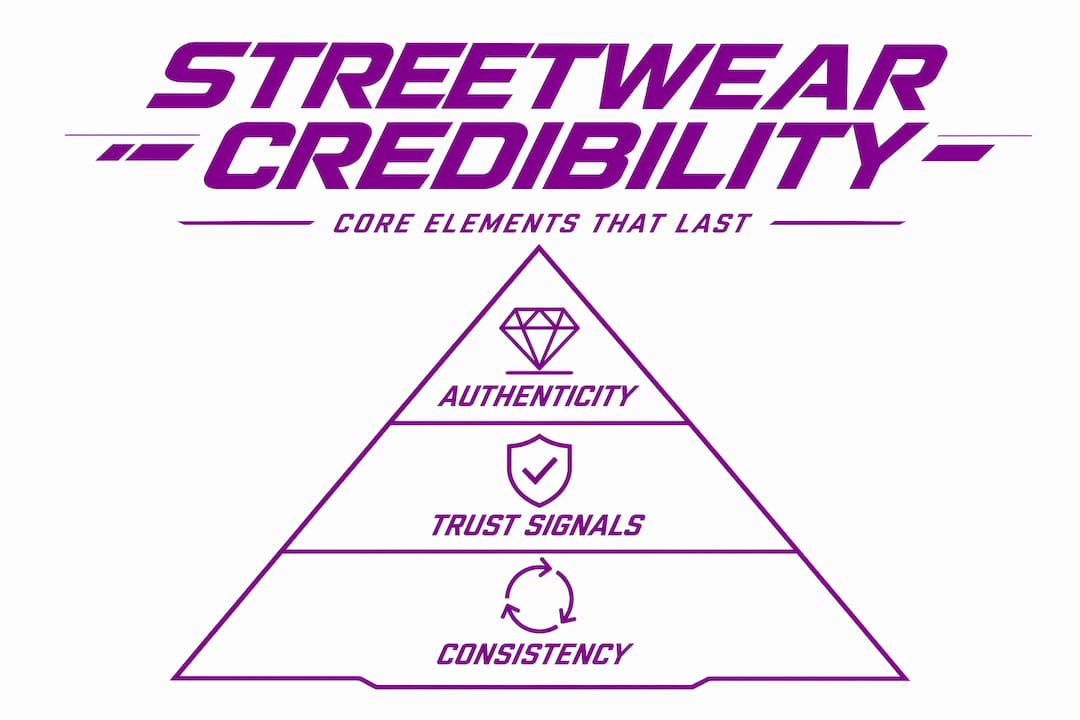
The key insight here is this: algorithmic visibility can be engineered, but conversion and retention depend on truthful signals that customers can verify. A beautiful product video that misrepresents color or fit destroys trust the moment the package arrives. Honest sizing, real models across a range of body types, and user-generated content showing how pieces actually wear are things AI cannot fake.
| Trust Signal | What It Communicates | Difficulty to Fake |
|---|---|---|
| Honest fit imagery with real customers | Transparency and respect for buyers | High |
| Serialized limited run numbering | Genuine scarcity, not manufactured hype | Medium |
| Verified third-party reviews | Independent social proof | High |
| Digital Product Passports | Supply chain traceability and origin | Very High |
| UGC reposted on brand channels | Community investment and real-world use | High |
Digital Product Passports (DPPs) are emerging as one of the most powerful credibility tools available to streetwear brands right now. A DPP is a secure, verifiable record of a product’s origin, materials, and sustainability data. Early adopters gain a commercial advantage because they can communicate supply chain transparency in a machine-readable format that customers and retailers can independently verify.
For brands selling into secondary markets, the value compounds. Blockchain-backed product histories make authentication verifiable and reduce counterfeit risk, which directly protects brand reputation in streetwear fashion and supports resale premiums.
Pro Tip: Start collecting and reposting UGC and video testimonials from your earliest customers. That raw, unfiltered social proof is more persuasive than any polished campaign you will ever run.
Creating loyalty: turning buyers into evangelists
The brands with the deepest credibility don’t just have customers. They have advocates. These are people who defend the brand in comment sections, tag friends in posts, and wear the gear to be seen in it. That kind of advocacy doesn’t happen accidentally.
Streetwear loyalty mechanics that actually convert buyers into evangelists include:
- Early access tiers. Giving loyal customers first access to drops before public release creates a sense of being inside the circle. It rewards history with the brand and makes commitment feel meaningful.
- Exclusive member rewards. Physical collectibles, members-only colorways, or handwritten notes in packages create experiences that feel personal and worth talking about.
- Gamification of loyalty points. Points that unlock status, not just discounts, appeal specifically to the streetwear audience, who already understand the culture of ranking and status.
- Personalized product recommendations. This is where data meets credibility. Personalization leaders generate 40% more revenue than brands that treat all customers the same. In streetwear, a recommendation that shows you understand someone’s taste feels like respect.
Measuring whether your credibility is real or manufactured is straightforward when you look at the right numbers. Referral rates, unprompted social mentions, and resale premiums for your pieces are all honest proxies for genuine brand reputation. If people are buying your gear to resell it at a profit, the market is telling you the credibility is real. Exploring exclusive drop strategies that reinforce scarcity and reward loyalty can sharpen these signals further.
Adding a structured loyalty program to your e-commerce operation is one of the fastest ways to operationalize the advocacy you are already building organically.
Staying consistent while evolving
Growth is where credibility goes to die for most streetwear brands. The pressure to scale production, expand into new markets, and collaborate broadly creates a constant pull away from the qualities that built the reputation in the first place.
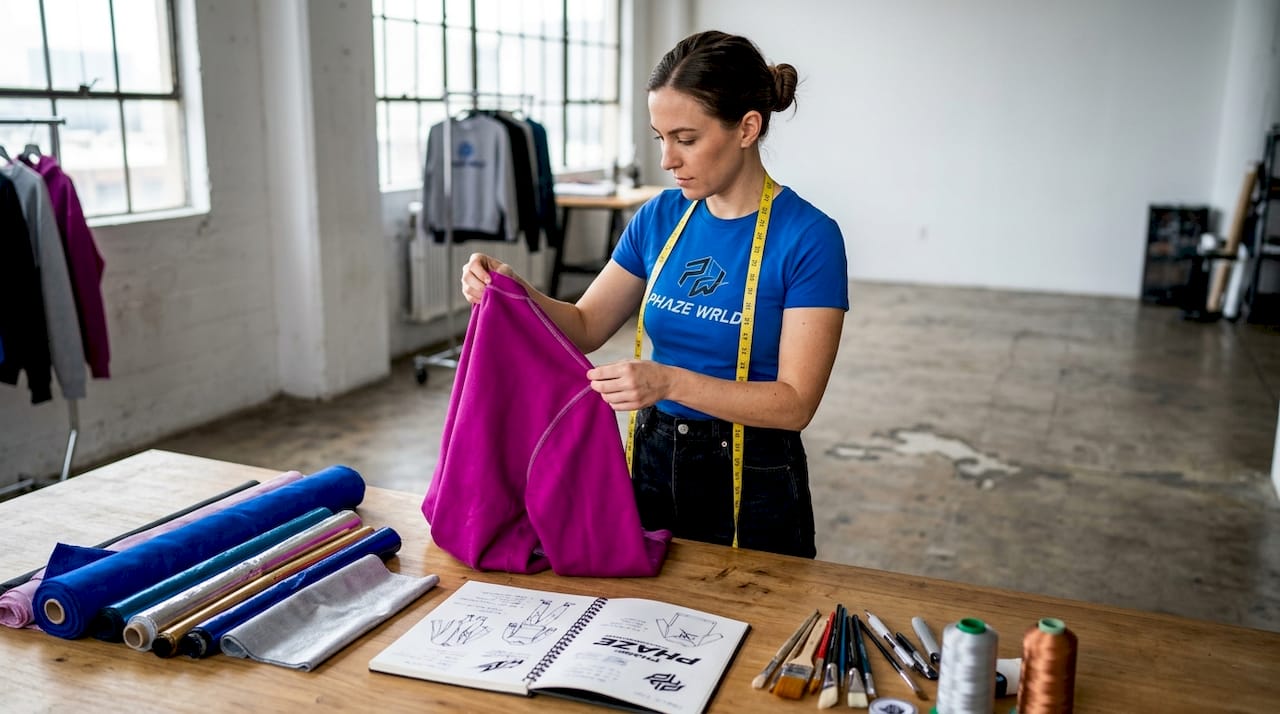
Protecting brand credibility as you grow requires a few non-negotiable commitments. First, consistent product quality has to be treated as infrastructure, not an aspiration. That means formal quality audits, defined material standards, and a feedback loop that surfaces problems before they become public complaints. Second, your brand voice needs to be documented and protected. The tone, the aesthetic, the references, and what you refuse to be associated with should all be written down somewhere. That document protects consistency when you are moving fast or working with new collaborators.
A few principles that hold up across brand sizes:
- Vet every collaboration against your cultural values, not just the commercial upside. A partnership that reaches a new audience but confuses your existing community is a net negative for credibility.
- Resist trend chasing. Credible brands set cultural reference points. They don’t follow them.
- Keep your community in the loop on brand decisions. Transparency about why you are growing, changing, or evolving builds trust rather than suspicion.
Understanding brand equity in streetwear is closely tied to these consistency decisions. The gap between what you promise and what you deliver is exactly where credibility either grows or erodes.
My take: what actually builds lasting credibility
I’ve watched a lot of streetwear brands try to shortcut their way to credibility, and the pattern is almost always the same. They invest in the signals of credibility rather than the substance of it. Big influencer deals, designed-to-go-viral campaigns, and aggressive paid social can generate a moment. They cannot generate a movement.
What I’ve found actually works is counterintuitive. The brands that build the deepest trust are almost always the ones that were willing to stay small long enough to build something real. Palace didn’t rush to scale. They documented their crew for years before the brand became a global name. That patience wasn’t a limitation. It was the strategy.
The other thing that most credibility advice gets wrong is treating social media presence as the goal rather than a byproduct. When you are genuinely embedded in a culture, creating content that community members actually care about, the social proof follows without being chased. The brands that feel desperate for validation are almost always the ones optimizing for follower count instead of community depth.
Transparency is the future-proof pillar that almost nobody talks about. Honest product information, verifiable supply chains, and real customer proof are harder to build than a viral campaign and far harder to fake. In an era where AI can manufacture almost any kind of content, truthful signals are the only ones that actually compound over time.
— Phazewrld
Wear the credibility: shop Phazewrld’s authentic collections
At Phazewrld, building brand trust isn’t a strategy document. It’s in every drop. The brand was built on the same principles this article covers: culture first, quality as a non-negotiable, and community over volume. Every piece is designed to mean something to the person wearing it, not just fill a rack.
If you want to see what credible streetwear actually looks like in product form, start with the men’s streetwear collection or explore the graphic tees that anchor every authentic wardrobe. For women, the women’s streetwear lineup brings the same bold identity to cuts designed for you. Free shipping over $99, easy returns, and price matching mean the barrier to experiencing the brand is as low as it gets. Own the streets. Define the culture.
FAQ
What does credibility mean for a streetwear brand?
Credibility in streetwear is the community’s judgment that a brand is genuine, consistent, and culturally informed. It is built through honest product delivery, cultural authenticity, and reliable quality over time, not marketing spend.
How do streetwear brands gain credibility without a big budget?
Brands gain credibility by documenting real culture before selling product, building genuine community relationships, and soliciting honest user-generated content. These organic trust signals outperform paid campaigns when done consistently.
Why do limited drops help build brand reputation in streetwear?
Limited drops create genuine scarcity, which signals cultural value and turns each release into a community event. When drops are serialized and honest about quantity, they build anticipation and long-term loyalty rather than just short-term attention.
What role does transparency play in streetwear marketing strategies for credibility?
Transparency, through honest sizing, real customer imagery, verified reviews, and traceable supply chains, gives customers verifiable reasons to trust a brand. In the AI era, these signals are harder to fake and carry more weight than polished marketing content.
What are Digital Product Passports and why do they matter for streetwear?
Digital Product Passports are secure, verifiable records of a product’s origin, materials, and sustainability data. For streetwear brands, they protect against counterfeits, support resale market credibility, and demonstrate supply chain honesty to increasingly informed buyers.