

TL;DR:
- Mastering day-to-night streetwear involves building around versatile anchor pieces, purposeful layers, and strategic accessory swaps.
- A capsule wardrobe with mixable items and adaptable layering allows effortless transition from casual daytime to polished evening looks.
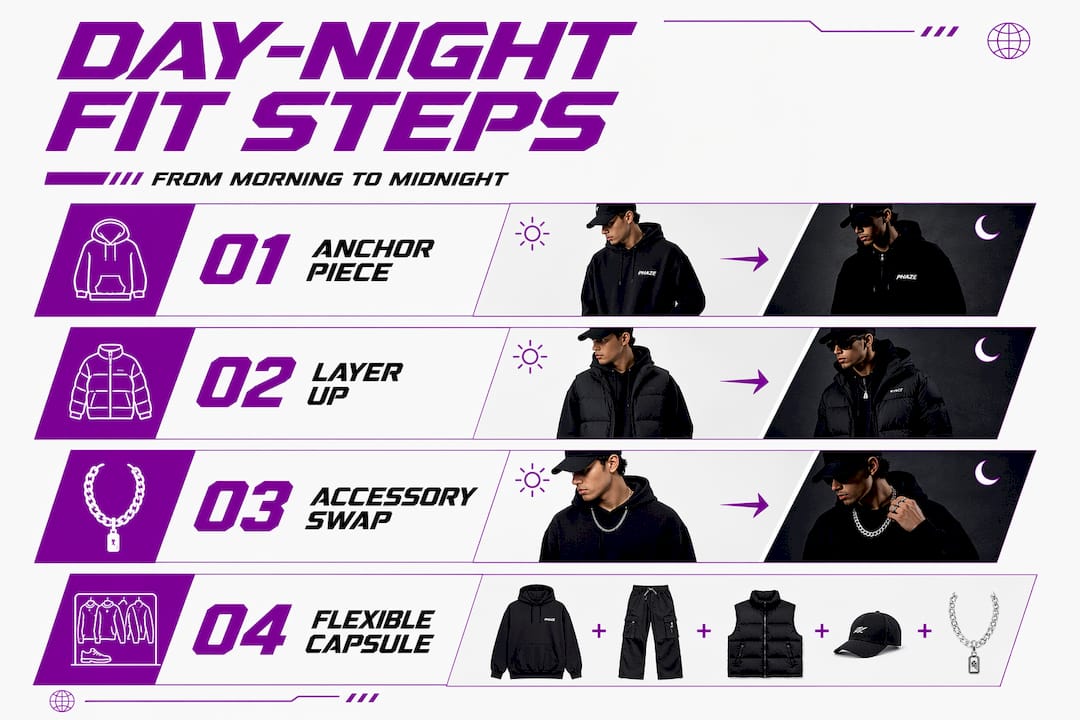
You throw on a clean fit in the morning, feel yourself all day, then 6 PM hits and suddenly your outfit feels off for wherever the night’s taking you. Sound familiar? Mastering transition streetwear day night looks isn’t about packing a second outfit or spending money on a wardrobe twice the size. It’s about building smarter from the start — choosing anchor pieces, learning to layer with purpose, and swapping the right details to shift the whole vibe. This guide breaks down exactly how to do it.
Table of Contents
- Key takeaways
- Transition streetwear day night looks: wardrobe staples that do both
- Layering techniques that shift your fit from morning to midnight
- Smart accessory swaps that change the whole energy
- Building a streetwear capsule wardrobe for day-night flexibility
- What building a real day-to-night wardrobe actually taught me
- Level up your wardrobe with Phazewrld
- FAQ
Key takeaways
| Point | Details |
|---|---|
| Start with an anchor piece | Build every outfit around one versatile item so swaps feel intentional, not random. |
| Layer with a purpose | Use a three-layer system so you can add or remove pieces as the day and temperature shift. |
| Swap accessories, not outfits | Changing shoes, jewelry, or a cap can completely transform your look without touching your base. |
| Build a capsule wardrobe | Each piece should mix with at least three others to maximize outfit options with fewer items. |
| Mood shift, don’t outfit replace | One focal change, like a jacket swap or a chain, moves you from casual to night-ready fast. |
Transition streetwear day night looks: wardrobe staples that do both
The foundation of any strong day to night style is knowing which pieces carry weight in both settings. Most people skip this step and end up with a closet full of clothes but nothing to wear when the vibe shifts. The fix is picking anchor pieces first.
An anchor piece is whatever your outfit revolves around. For streetwear, that usually means:
- Well-cut cargo or tailored trousers that read casual in daylight and structured at night
- Neutral oversized tees or ribbed long sleeves that play well under layers or stand alone
- Statement tops with interesting graphics, textures, or cuts that hold visual weight across settings
- Dark wash or straight-leg denim that crosses day and night without effort
- Monochrome sets where the top and bottom match, creating an intentional look that scales up easily
Day-to-night outfit failures almost always happen because people grab random evening pieces and throw them over a day look that was never built to transition. Starting with one strong anchor and building around it solves that instantly.
When you’re evaluating whether a piece qualifies as a wardrobe staple, think about fabric, fit, and flexibility. Mid-weight fabrics like cotton blends, French terry, and twill hold their shape from morning to midnight. A slightly relaxed but intentional fit, not sloppy, not stiff, works in any setting. And white canvas trousers or neutral bottoms offer the kind of seasonal and contextual range that cheaper impulse buys simply can’t match.
Pro Tip: Before buying any new piece, ask yourself if it can build at least three different outfits in your current wardrobe. If the answer is no, it’s probably a one-wear item that’ll collect dust after the second use.
Layering techniques that shift your fit from morning to midnight
Layering is the single most underrated tool in streetwear. When done right, it doesn’t add bulk. It adds adaptability. The goal is to build an outfit that peels back or builds up depending on where you are and what time it is.
Successful streetwear layering follows a three-layer structure that keeps you covered without overdoing it. Here’s how it breaks down:
- Base layer: Lightweight tee, long sleeve, or ribbed top. This is your foundation. It should be clean and intentional enough to stand alone if everything else comes off.
- Mid layer: A hoodie, overshirt, or shacket. This is your transitional piece. It controls warmth and silhouette.
- Outer layer: A bomber, coach jacket, or heavyweight fleece. This sets the tone for how dressed the look reads overall.
The real power move here is the mid layer. Overshirts and shackets are heavier than a shirt but lighter than a jacket, which means they replace coats in fall and spring, give structure without bulk, and can be worn open over a hoodie or closed as a standalone top. That flexibility is exactly what makes them perfect for transitional fashion looks.
Here’s a quick comparison to show how the same three-layer system shifts across day and night:
| Setting | Base layer | Mid layer | Outer layer | Overall vibe |
|---|---|---|---|---|
| Morning commute | Graphic tee | Zip hoodie | Bomber jacket | Casual, put-together |
| Afternoon hangout | Graphic tee | Zip hoodie (open) | Bomber jacket (removed) | Relaxed, street-ready |
| Evening out | Graphic tee | Shacket (closed) | Bomber jacket back on | Structured, night-ready |
Notice that the base never changes. You’re adjusting layers, not rebuilding. Layering with knits and transitional pieces allows outfits to evolve through changing weather and settings without the stress of a full outfit change. That’s the whole point.
Pro Tip: Before you leave the house, check both the afternoon high and the evening low. If there’s more than a 15-degree difference, build your mid layer into the fit from the start so you’re never stuck cold or overdressed.
Smart accessory swaps that change the whole energy
Here’s the part most people overlook when they’re figuring out how to style streetwear for different times of day. You don’t need to change your clothes. You need to change the conversation your outfit is having. And that happens through accessories.
Accessory swaps like adding statement jewelry or switching footwear can completely shift an outfit’s mood without touching a single clothing item. That’s a lot of leverage from a relatively small change. Here’s where to focus:
- Footwear: Swap chunky skate shoes or clean runners for sleek boots or low-profile leather sneakers. Multi-use footwear like block heels or sleek boots works in both daytime and evening settings, and it’s one of the fastest ways to add polish to a casual night ensemble without overdressing.
- Jewelry: A plain chain, a stacked ring set, or a single bold earring changes how much intention your outfit signals. Day jewelry can be minimal or none. Evening calls for one or two pieces that catch light.
- Headwear: A streetwear cap is a daytime finisher that can come off at night to let the rest of the fit breathe, or stay on if the vibe calls for it.
- Bags: A crossbody or shoulder bag reads more intentional than a backpack when the sun goes down. Swap the utility bag for something more streamlined.
Building around one standout element like bold jewelry or a textured outer layer keeps the outfit coherent when you transition. The mistake most people make is trying to add too much at once. Pick one focal swap. Change the shoes. Add the chain. That’s usually all you need.
Pro Tip: Keep a small pouch in your bag with your evening accessories: a chain, a ring, or a small pair of earrings. When the day ends, you’ve got your night kit ready in under two minutes.

Building a streetwear capsule wardrobe for day-night flexibility
The concept of a capsule wardrobe sounds like something for minimalists in neutral linen, but it actually hits different in streetwear. Each capsule piece needs to mix with at least three others to earn a spot in your rotation. That rule alone filters out most impulse buys.
The practical structure for a streetwear capsule is built on that three-layer system from the layering section. You’re building interchangeable options at each level, not standalone outfits. Think of it like this:
- Three to four base layer options: Two graphic tees, one solid tee, one long sleeve. All neutral or tonal enough to sit under multiple mid layers.
- Two to three mid layers: One hoodie, one overshirt, one lightweight zip fleece. Different weights for different temperatures.
- Two outer layers: One bomber or coach jacket for warmer seasons, one heavier fleece or shell for fall and winter.
- Two to three bottoms: One cargo pant, one straight-leg denim, one jogger that doesn’t look like you just woke up.
Avoiding overloading on trendy pieces that can’t integrate into multiple outfits is what separates a capsule from a cluttered closet. Special pieces that only work in one specific combo will always let you down when you need to dress fast.
Here’s what a functional capsule looks like in action:
| Capsule item | Day pairing | Night pairing | Versatility score |
|---|---|---|---|
| Black cargo pants | Tee + hoodie + runners | Ribbed top + shacket + boots | High |
| Neutral graphic tee | Joggers + cap + bomber | Trousers + chain + leather sneakers | High |
| Zip-up hoodie | Cargo pants + tee (underneath) | Under bomber, worn open | Medium |
| Coach jacket | Joggers + tee + clean sneakers | Straight-leg denim + chain | High |
| Ribbed long sleeve | Under shacket with joggers | Standalone with trousers + rings | Medium |
The capsule approach also solves decision fatigue. When every piece connects to at least two other items, you’re never starting from scratch. You’re always picking combinations, not hunting for missing links.
What building a real day-to-night wardrobe actually taught me
I’ve seen people spend serious money on streetwear and still get stuck every time their plans shift from afternoon to evening. The problem was never the budget. It was the logic behind the buying.
What changed my approach was committing to anchor pieces first. Not the loudest piece in the fit, but the one everything else could pivot around. Once I had two or three of those working, the whole wardrobe started making sense. I stopped buying things I loved in isolation and started buying things I could actually use together.
The layering piece took longer to get right. For a while, I thought layering meant wearing more. It doesn’t. It means wearing smarter. A shacket over a fitted tee, with a bomber for later, is three looks in one outfit. That realization saved me from overpacking and underdressing at the same time.
The accessory swap is where most people get the biggest return for the least effort. I used to change everything for a night out. Now I change two things max. Usually the shoes and one piece of jewelry. That’s genuinely all it takes to move from a casual look to something that reads like you planned it.
The bigger mindset shift was moving from outfit replacement to outfit evolution. Your day fit isn’t wrong. It just needs to be built in a way that lets it grow into your night fit. That’s the whole game.
— Phazewrld
Level up your wardrobe with Phazewrld
If you’re ready to build the kind of wardrobe that actually works from morning to midnight, Phazewrld has everything you need to start. The men’s streetwear collection and women’s streetwear collection are stacked with capsule-ready pieces built for real versatility: hoodies that layer without bulk, sweatpants styled for day or night, and graphics that carry weight in any setting. Every drop at Phazewrld is designed for people who want to own the streets at 10 AM and 10 PM. Shop the current collections and start building a wardrobe that moves with you.
FAQ
What makes a streetwear outfit work for both day and night?
Starting with a versatile anchor piece and building around it with swappable layers and accessories makes an outfit work across both settings. Day-to-night transitions fail most when evening pieces are added randomly instead of planned from the start.
How do you transition streetwear from casual to night-ready fast?
Swap one to two accessories, typically your footwear and one piece of jewelry, and adjust your layering by removing or adding your outer layer. Mood shifting works best through one focal change rather than a full outfit overhaul.
What are the best mid layers for streetwear day-to-night transitions?
Overshirts and shackets are the strongest mid layers because they provide structure without bulk and can be worn open or closed depending on temperature and formality.
How many pieces do you need for a streetwear capsule wardrobe?
A functional streetwear capsule needs roughly ten to fifteen pieces across base layers, mid layers, outer layers, and bottoms. Each piece should mix with at least three others to give you enough combinations for any setting without closet overload.
Can streetwear really work for night outings without dressing up?
Yes. Casual night ensembles built on well-cut streetwear pieces with intentional accessories read polished without formal dressing. The key is silhouette, fit, and one or two elevated details rather than a full style change.