

TL;DR:
- Streetwear trends are driven by platform-specific content strategies, creator partnerships, and real-time trend detection on TikTok and Instagram. Authentic micro-trend spotting and localized storytelling by mid-tier creators amplify influence, while agile, low MOQ production enables rapid releases. Consistent episodic content and strategic collaborations position brands to move swiftly and build lasting cultural impact.
Setting streetwear trends on social media is defined as using platform-specific content strategies, creator partnerships, and real-time trend data to drive urban fashion adoption at scale. TikTok and Instagram are the two platforms where this influence is built and lost fastest. Short-form video content on both platforms has reshaped how streetwear trends 2023 through 2026 have moved from niche underground looks to mainstream culture. Whether you’re an individual stylist, an emerging streetwear brand, or a creator building your identity, the playbook for influencing social media fashion trends is now more specific and more demanding than ever.
What social media platforms and formats set streetwear trends?
TikTok and Instagram Reels are the undisputed engines of streetwear trend-setting in 2026. Instagram Reels increase engagement by 25% compared to static posts, while TikTok videos drive 50 to 70% higher engagement than any other format on the platform. That gap matters because engagement is the currency algorithms use to decide which content gets pushed to new audiences.
The formats that consistently perform best for influencers streetwear style content are OOTD (outfit of the day), GRWM (get ready with me), unboxing, and styling challenges. Each format serves a different function. OOTD content shows the finished look and inspires immediate replication. GRWM content builds personal connection and trust. Unboxing drives hype around drops. Styling challenges invite community participation, which multiplies your reach without additional production cost.
Hashtag strategy is where most creators leave reach on the table. Mixing broad, niche, and brand-specific hashtags improves discoverability by up to 40%. That means pairing tags like #streetwear (broad) with tags like #ChicagoStreetStyle (niche) and your own brand tag in every caption. Using 10 to 15 targeted hashtags per post is the optimal range.
Pro Tip: Post TikTok content during lunch hours (12 to 1 PM) and evenings (7 to 9 PM) when your audience is most active. TikTok content peaks within 2 to 3 hours of posting, so timing is not optional.
Here is a quick reference for platform posting frequency:
| Platform | Recommended frequency | Best formats |
|---|---|---|
| TikTok | 3 to 5 times per day | GRWM, styling challenges, unboxing |
| Instagram Reels | 3 to 5 times per week | OOTD, Reels series, collabs |
| Instagram Stories | Daily | Polls, countdowns, behind-the-scenes |
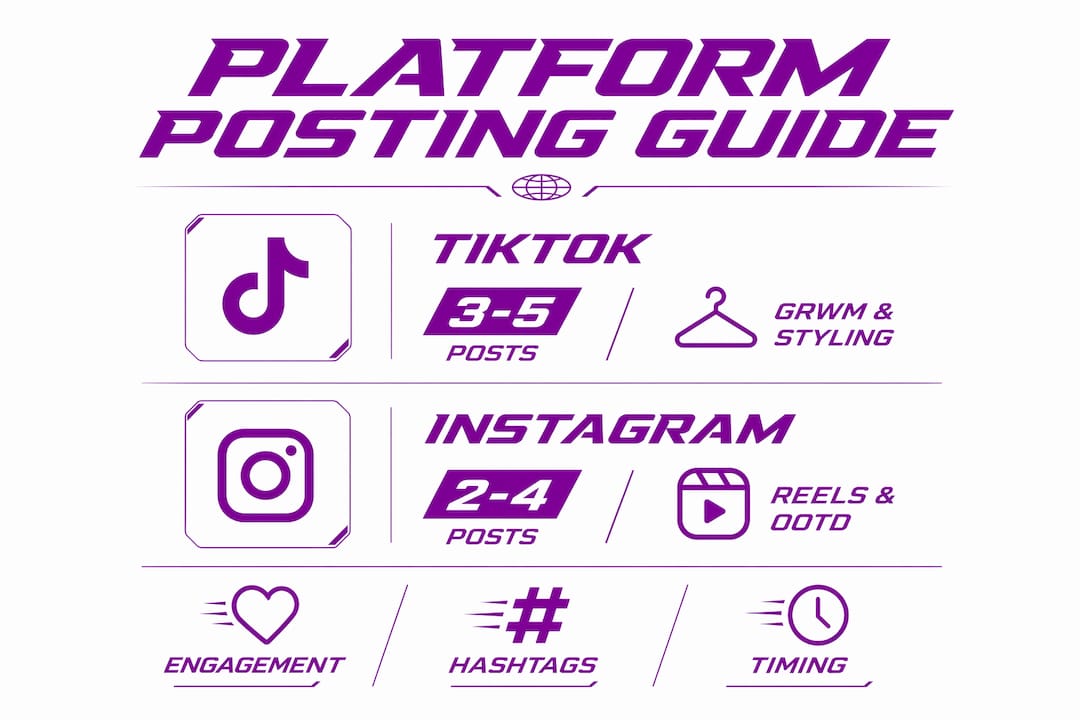
Consistency at this frequency signals to both the algorithm and your audience that you are an active, reliable source of style content. Dropping below these thresholds causes measurable reach decline.
How to spot emerging streetwear micro-trends before they peak
A micro-trend is a style signal that moves from niche introduction to broad adoption in under a week, sometimes surging within hours. This acceleration has shifted the entire streetwear content cycle from seasonal planning to daily monitoring. Brands and creators who still operate on quarterly drop schedules are consistently late to the conversation.
Spotting these trends early requires a structured approach:
- Monitor saves and shares, not just likes. Saves signal that a viewer wants to return to the content. Shares signal they want others to see it. Both are stronger indicators of trend momentum than a like, which is passive.
- Follow mid-tier style creators in the 50k to 500k follower range. GRWM content from these creators is more trend-predictive than haul videos or celebrity posts. They are close enough to the street to catch trends early and large enough to signal when something is crossing over.
- Use social listening tools. Platforms like Later Social’s Future Trends feature and tools like Brandwatch track keyword and hashtag velocity, showing you which terms are accelerating before they hit the mainstream feed.
- Check street style on Instagram in specific cities. New York, Tokyo, Seoul, and Lagos each generate distinct micro-trend universes. A silhouette blowing up in Seoul often hits North American feeds within days.
- Track comment sections, not just content. When multiple commenters on a creator’s post are asking “where is this from?” or “what brand is this?”, that is a real-time demand signal.
The harder discipline is knowing when not to participate. Forced trend-jacking that misaligns with your brand voice reduces perceived credibility by 5 to 10%. That is a real cost. Chasing every micro-trend without filtering for brand fit turns your feed into noise. Understanding streetwear authenticity is what separates creators who build lasting influence from those who spike and disappear.
Pro Tip: Build a private TikTok collection of saved videos that represent your aesthetic. Review it weekly. If a new trend fits naturally into that collection, it is worth participating in. If it feels forced, skip it.
How do creator collaborations build streetwear trend influence?
Creator collaboration is the fastest way to move a streetwear trend from your feed to a wider audience, but the type of creator you choose determines whether that reach converts to cultural influence. Mid-tier creators with 50,000 to 500,000 followers consistently outperform mega-influencers for trend-setting because their audiences are engaged, niche, and trusting. A styling video from a 200k-follower creator in Atlanta carries more weight with their community than a paid post from a celebrity with 10 million followers who covers every category.
The concept of “locality” in creator content is one of the most underrated forces in social media fashion trends. Creator Diya Joukani built a global following by integrating her city’s unique context into every outfit post, creating a trend universe that fans wanted to inhabit rather than just observe. That approach drives authentic global interest that no amount of paid promotion can replicate. Locality does not mean limiting your appeal. It means grounding your content in a specific, real world that gives it texture and credibility.
“Success in streetwear is less about follower count and more about authentic, localized storytelling that creates immersive worlds.” — Later Social
User-generated content (UGC) challenges are the most scalable collaboration format available. When you launch a styling challenge around a specific piece or look, you turn your audience into co-creators. Each participant extends your reach into their own network. The key is making the challenge specific enough to be interesting but open enough to allow personal expression. “Style this hoodie three ways” works. “Wear our brand” does not.
Episodic storytelling is another underused strategy. Instead of posting one-off content, build a narrative arc across multiple posts. Introduce a drop, then show the styling, then feature community fits. This structure keeps your audience returning and signals consistent engagement to the algorithm. For deeper context on how creator partnerships function in streetwear, the mechanics are more nuanced than a simple paid post arrangement.
Pro Tip: When reaching out to mid-tier creators, lead with creative freedom. Creators who feel constrained by brand briefs produce content that reads as an ad. Creators given latitude produce content that reads as culture.
How to optimize content production for viral streetwear drops
The production side of setting trends on social media is where most people underinvest. Content quality, drop timing, and manufacturing agility all feed into whether a streetwear release generates momentum or gets ignored.
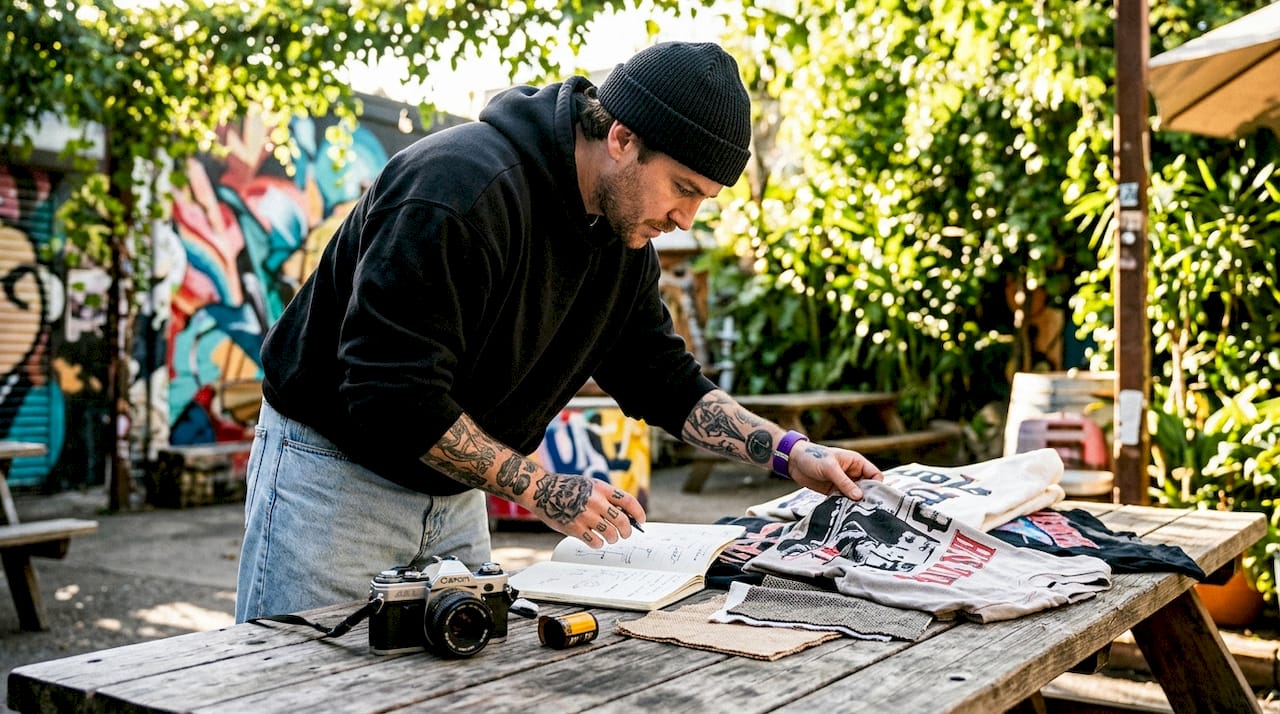
Low minimum order quantity (MOQ) manufacturing has changed the economics of streetwear drops entirely. Specialized factories now offer 50-piece minimum orders with 7-day sampling and 10 to 14 day production turnaround. The financial exposure per test run sits between $800 and $1,200. That means you can produce a design, test it against real social media data, and kill or scale it within three weeks. Brands that still commit to large production runs before validating demand on social media are taking unnecessary risk.
Here is a practical drop content sequence that maximizes algorithmic reach:
- Day 1: The teaser. Post a close-up of the fabric, a detail shot, or a silhouette reveal. Do not show the full piece. Build anticipation.
- Day 3: The drop announcement. Full reveal with styling context. Use a countdown sticker on Stories. Pin the post.
- Day 5: The styling video. Show the piece worn three different ways. OOTD or GRWM format works best here.
- Day 7: Community fits. Repost UGC from early buyers or gifted creators. This is social proof in its most effective form.
- Day 10 to 14: The recap. Engagement summary, restocking announcement, or “sold out” post. Scarcity signals drive future drop anticipation.
Episodic content series running 7 to 14 days consistently outperform single drop videos for both engagement and extended algorithmic reach. The series structure also gives you real-time data on which posts perform best, which informs your next design iteration.
Fabric and garment choice matters more than most creators acknowledge. Pieces with strong visual texture, bold graphics, or distinctive silhouettes perform better on video than minimalist basics. A heavyweight fleece hoodie with an oversized fit reads clearly on a phone screen. A plain slim-fit tee does not generate the same visual interest. Choose pieces that reward a second look.
Pro Tip: A/B test colorways before committing to a full run. Post two versions of the same design in different colors and track saves and comments over 48 hours. The data will tell you which to produce.
Key takeaways
Setting streetwear trends on social media requires platform-specific posting discipline, early micro-trend detection, authentic creator partnerships, and agile production cycles working together.
| Point | Details |
|---|---|
| Platform and format discipline | Post TikTok 3 to 5 times daily and Instagram Reels 3 to 5 times weekly using GRWM, OOTD, and challenge formats. |
| Micro-trend detection | Monitor saves, shares, and mid-tier creator content daily to catch trends before they peak. |
| Creator collaboration | Partner with 50k to 500k follower creators who use localized, authentic storytelling for higher engagement quality. |
| Agile production | Use low MOQ manufacturing with 2 to 3 week turnaround to test designs against real social data before scaling. |
| Episodic content strategy | Run 7 to 14 day content series around each drop to sustain algorithmic reach and build community anticipation. |
What we’ve learned from watching trends move in real time
At Phazewrld, we have watched the streetwear trend cycle compress to a point that would have seemed impossible five years ago. A silhouette that surfaces in a Tokyo alley on Monday can be in a Chicago creator’s GRWM video by Thursday and sold out on a brand’s website by Sunday. That speed is not a threat. It is an opportunity, but only for people who are paying attention every single day.
The uncomfortable truth is that most people trying to set trends are actually just chasing them. They see something blow up, scramble to replicate it, and post it two weeks too late. The creators and brands who actually move culture are the ones who have built a clear enough aesthetic identity that they can filter every trend through a single question: does this fit who we are? If the answer is yes, they move fast. If the answer is no, they let it pass.
We have also seen how locality, the thing Diya Joukani does so well, creates a kind of content gravity that generic trend-chasing never achieves. When your content is rooted in a specific place, community, or cultural reference, it becomes irreplaceable. Nobody else can make that exact video. That specificity is what builds the kind of following that actually buys, shares, and advocates for your brand rather than just scrolling past.
The algorithm rewards consistency and engagement, but culture rewards authenticity. The brands and creators who figure out how to deliver both at the same time are the ones who define what streetwear looks like next season.
— Phazewrld
Stay ahead with Phazewrld’s latest streetwear collections
If you are building your social media presence around streetwear, the pieces you wear on camera matter as much as the content itself. Phazewrld designs hoodies, tees, sweatpants, and headwear built for the kind of bold visual impact that performs on TikTok and Instagram Reels. Every drop is designed to stand out on screen and hold up in real street culture.
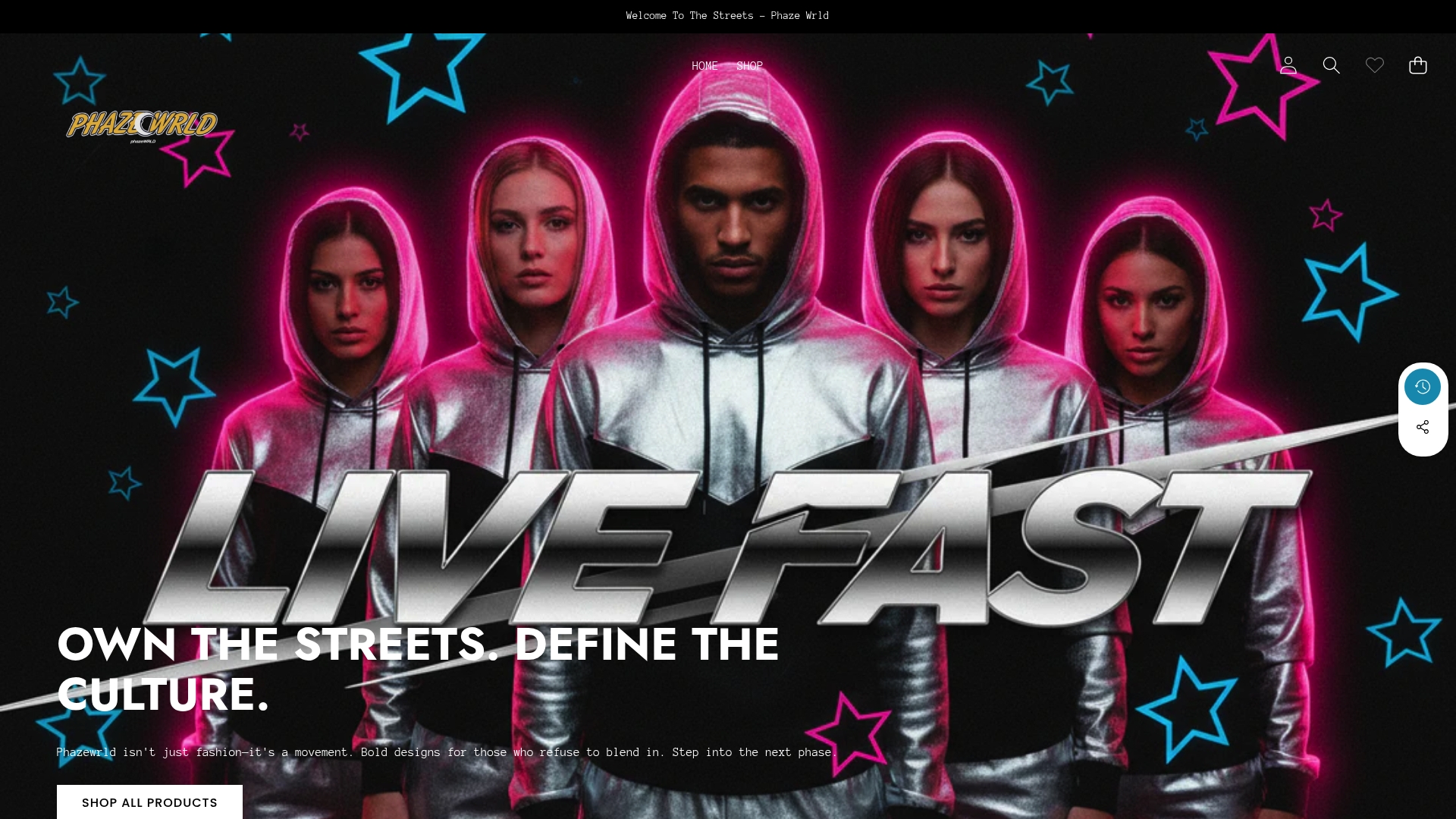
Explore the men’s streetwear collection for the latest drops built around current social media fashion trends, or check out the women’s streetwear range for pieces that translate directly into high-performing content. Free shipping on orders over $99 and easy returns mean you can test pieces before committing to a full content series around them.
FAQ
What platforms are best for setting streetwear trends?
TikTok and Instagram are the two primary platforms for setting streetwear trends, with TikTok driving 50 to 70% higher engagement through short-form video and Instagram Reels adding 25% more engagement than static posts.
How often should I post streetwear content on TikTok?
Post 3 to 5 times per day on TikTok for maximum algorithmic reach, with content timed during lunch hours and evenings when engagement peaks within the first 2 to 3 hours.
What type of creator should I collaborate with for streetwear trends?
Mid-tier creators with 50,000 to 500,000 followers using GRWM and styling-heavy content generate the highest engagement quality and are more trend-predictive than celebrity or haul-focused accounts.
How do I know if a micro-trend is worth participating in?
Track saves and shares on trend-related content rather than likes, and only participate if the trend aligns with your existing brand aesthetic. Misaligned trend-jacking reduces perceived credibility by 5 to 10%.
What is the best content format for a new streetwear drop?
An episodic content series running 7 to 14 days, covering the teaser, reveal, styling, community fits, and recap, consistently outperforms single drop videos for both engagement and sustained algorithmic reach.