

TL;DR:
- A streetwear staple is a culturally meaningful, durable clothing item built for intentional styling and community identity. These pieces, like heavyweight tees and neutral sneakers, prioritize quality and self-expression over fleeting trends. Building a wardrobe around 3-5 authentic staples allows for versatile, long-lasting personal style within streetwear culture.
A streetwear staple is defined as a foundational, versatile clothing item built for frequent wear, intentional styling, and cultural expression within streetwear culture. These pieces are not generic casual wear. They carry design intent, subcultural roots, and a durability that fast fashion cannot replicate. Think oversized hoodies, heavyweight graphic tees, and neutral sneakers from brands like Nike or New Balance. Understanding what separates a true streetwear staple from a basic T-shirt is the first step toward building a wardrobe that actually means something.
What does streetwear staple mean in practice?
A streetwear staple is a foundational, highly versatile clothing item valued for durability and cultural relevance rather than seasonal trends. That distinction matters more than most beginners realize. A plain white tee from a fast-fashion retailer and a 220 GSM boxy tee from a streetwear brand may look similar on a hanger. On your body, in your community, and over time, they are completely different objects.
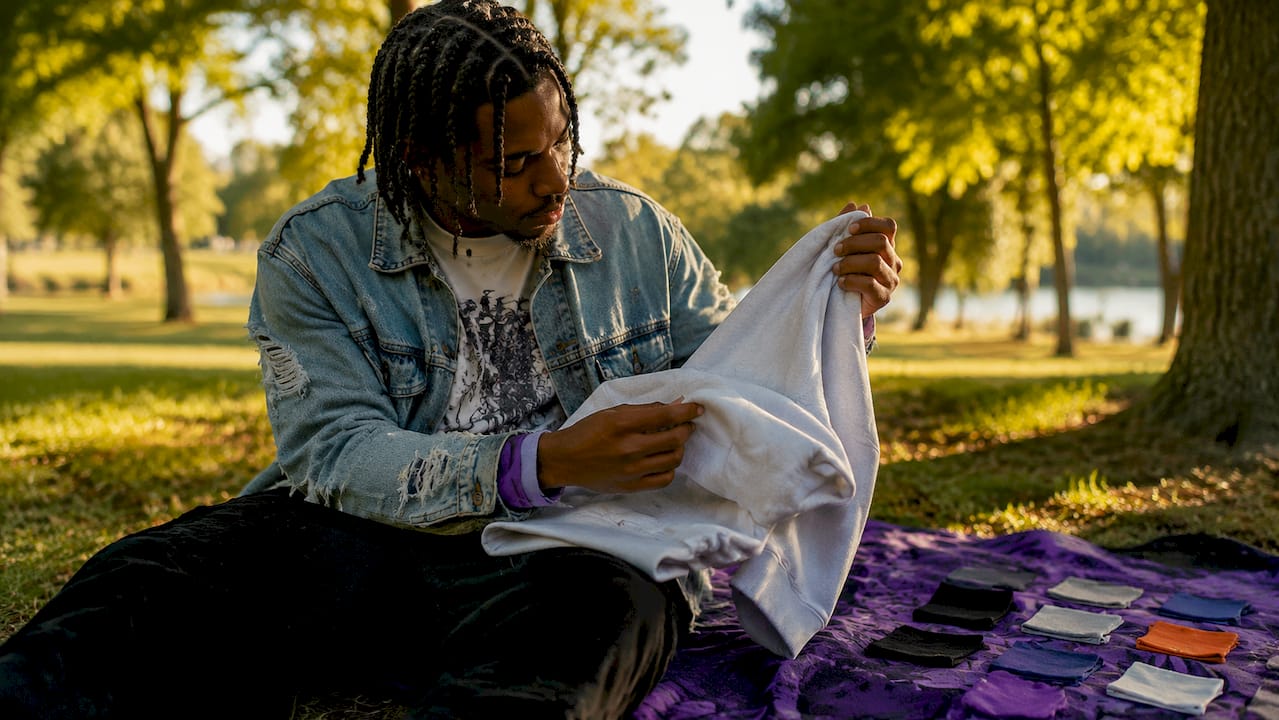
The term “streetwear staple” is the widely used informal phrase. The recognized industry concept behind it is the wardrobe essential, but within streetwear culture, a staple carries additional weight. It signals community membership, aesthetic alignment, and intentional self-expression. Designer Jeff Staple, the creator of the iconic Nike Pigeon Dunk, defines a staple as something you genuinely cannot live without, grounded in authenticity rather than hype. That framing cuts through a lot of noise.
Streetwear’s defining feature is intentionality tied to its subcultural roots, making staples a form of self-expression rather than just casual clothing. Hip-hop, skateboarding, and surf culture each contributed specific silhouettes, fabrics, and attitudes that became codified over decades. When you wear a staple, you are referencing that history, whether you know it or not.
What are the key characteristics of a streetwear staple?
Building a streetwear wardrobe starts with 3–5 core staples built around heavyweight fabrics, relaxed fits, and deliberate construction. These are not arbitrary preferences. Each characteristic serves a specific function in how the piece performs and communicates.
The core traits of a true streetwear staple:
- Fabric weight: Heavyweight materials, typically 200+ GSM, provide structure, durability, and a boxy silhouette that holds its shape after repeated washing.
- Silhouette: Relaxed, boxy, or dropped-shoulder fits are standard. These cuts read as intentional, not ill-fitting.
- Graphics and color: Minimalist but deliberate. Either a clean neutral palette or a graphic with cultural meaning. Nothing random.
- Cultural connection: Tied to subcultures like hip-hop, skateboarding, or street art. The piece references a world beyond the mall.
- Longevity: Designed for frequent wear over years, not seasons. A staple gets better with age, not worse.
Pro Tip: When evaluating a potential staple purchase, flip the garment inside out. Check the stitching density and fabric weight. Thin seams and light fabric are fast-fashion signals, regardless of the brand name on the label.
The deliberate design intent and longevity of true staples set them apart from mass-market casual wear. That intent shows up in every detail, from the weight of the cotton to the placement of a logo.
How do streetwear staples differ from casual wear and fast fashion?
Streetwear staples carry brand identity and aesthetic values tied to subcultures, while casual wear focuses on comfort and price point alone. That is the clearest way to draw the line. A hoodie from a fast-fashion chain solves a warmth problem. A hoodie that qualifies as a streetwear staple solves a style problem, a community problem, and an identity problem simultaneously.
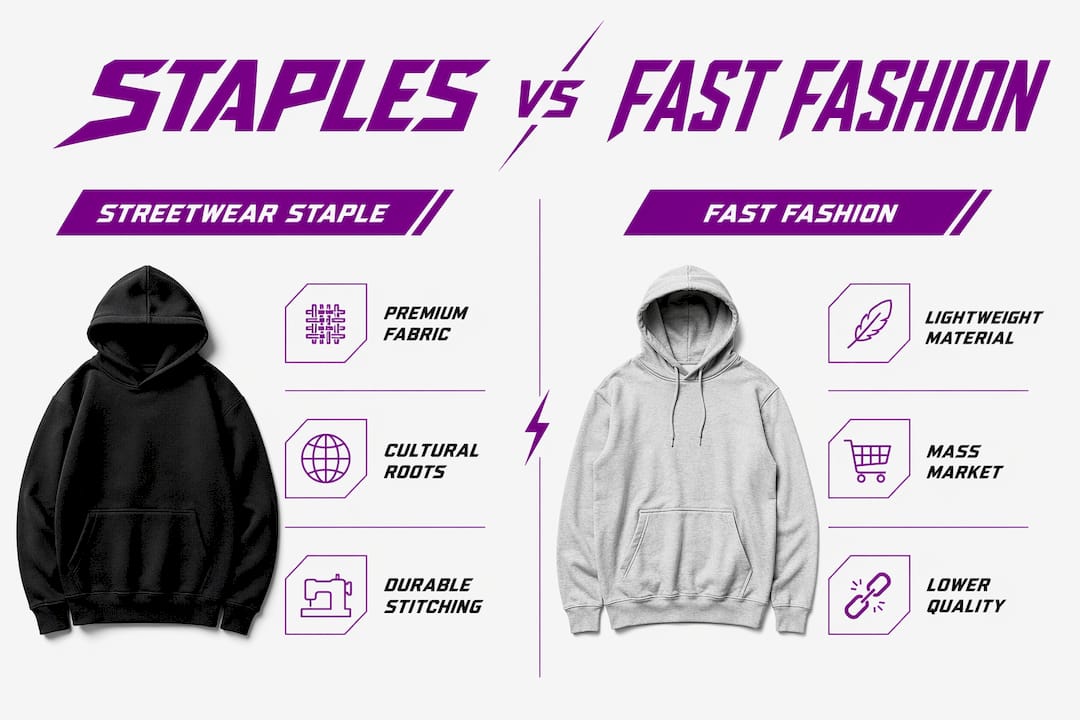
| Feature | Streetwear Staple | Fast Fashion Casual Wear |
|---|---|---|
| Fabric weight | 200+ GSM, structured | Lightweight, often under 150 GSM |
| Fit intention | Boxy, dropped shoulder, deliberate | Generic, sized to minimize returns |
| Cultural meaning | Tied to hip-hop, skate, or street art | None |
| Longevity | Built for years of wear | Designed for 1–2 seasons |
| Price point | Mid to premium | Low |
| Identity signal | Community membership, aesthetic alignment | None |
Mass-market casual wear lacks the deliberate design intent and longevity that define a true staple. The table above shows this is not just about price. A $200 fast-fashion collaboration piece still fails the staple test if it lacks cultural grounding and construction quality.
Pro Tip: Before buying something labeled “streetwear,” ask yourself: does this piece connect to a real subculture, or is it just borrowing the aesthetic? Authenticity is the difference between a staple and a costume.
You can read more about fast fashion vs. streetwear on the Phazewrld blog for a deeper breakdown of how these two worlds diverge.
Why minimalist streetwear staples are dominating in 2026
Minimalist streetwear staples, led by brands like Fear of God Essentials, focus on neutral palettes and clean silhouettes built for longevity rather than seasonal hype. This shift is reshaping what a staple looks like in 2026. The loudest piece in the room is no longer the most respected one.
Several forces are driving this minimalist turn:
- Oversaturation of graphics: After years of logo-heavy drops, a clean, well-constructed piece now reads as more sophisticated.
- Sustainability awareness: Younger buyers are choosing fewer, better pieces. A neutral-toned heavyweight hoodie works across seasons and years.
- Cultural maturity: Streetwear has moved from niche subculture to global fashion category. Minimalism signals fluency, not entry-level enthusiasm.
- Versatility: Neutral staples layer with everything. A stone-colored boxy tee works under a bomber, over a long-sleeve, or alone.
Minimalist streetwear staples use relaxed yet structured shapes and premium fabrics, contrasting sharply with the fit and fabric of simple fast-fashion casual wear. Fear of God Essentials proved that a beige hoodie with a small logo could generate the same cultural heat as a limited-edition graphic drop. That changed the conversation permanently.
Owning reliable streetwear staples allows individuals to maintain personal style that is effortless yet intentional, especially in fast-evolving fashion scenes. Minimalism makes that easier because the pieces do not compete with each other.
Popular streetwear staple items and how to style them
Successful streetwear wardrobes balance reliable staples with limited-edition statement pieces that express personal style and cultural identity. The staples are your foundation. Everything else builds on top.
Here are the core pieces and how to wear them:
- Heavyweight T-shirt (200+ GSM): Wear it alone with cargo pants and clean sneakers for a minimal look. Layer it under an open flannel or zip hoodie for added depth. A boxy oversized tee is the single most versatile piece in a streetwear wardrobe.
- Oversized or boxy hoodie: The anchor of most streetwear fits. Pair with slim joggers to balance volume, or stack with a tee underneath for layering texture. Streetwear hoodies in neutral tones work across every season.
- Cargo or relaxed-fit pants: Functional and cultural. Wear with a tucked-in graphic tee or let a longer hoodie drape over the waistband.
- Streetwear sweatpants: Not gym wear. A structured sweatpant in a premium fabric reads completely differently. Pair with a fitted tee and low-profile sneakers.
- Sneakers from Nike, Adidas, or New Balance: Sneakers are foundational in streetwear, reflecting collector culture and brand allegiance. They complete the look and often communicate the most about your taste.
| Staple Piece | Best Pairing | Occasion |
|---|---|---|
| Heavyweight tee | Cargo pants, clean sneakers | Everyday, casual outings |
| Boxy hoodie | Slim joggers, low-profile sneakers | Street, layered looks |
| Relaxed cargo pants | Graphic tee, chunky sneakers | Weekend, cultural events |
| Structured sweatpants | Fitted tee, minimalist sneakers | Casual, athleisure crossover |
| Neutral cap | Any staple combination | Finishing touch, all occasions |
For guidance on transitioning these pieces across seasons, the Phazewrld guide on seasonal wardrobe transitions covers exactly how to rotate staples without losing cohesion.
Key takeaways
A streetwear staple is a premium, culturally grounded clothing item built for longevity, intentional styling, and identity expression within streetwear culture.
| Point | Details |
|---|---|
| Definition of a staple | A streetwear staple is a foundational piece valued for cultural relevance and durability, not trends. |
| Fabric and construction | True staples use 200+ GSM fabrics, boxy silhouettes, and durable stitching that fast fashion cannot match. |
| Staples vs. casual wear | Streetwear staples carry subcultural identity; casual wear prioritizes comfort and low cost alone. |
| Minimalism in 2026 | Brands like Fear of God Essentials prove neutral, clean staples now carry as much cultural weight as loud graphics. |
| Styling foundation | Build your wardrobe around 3–5 core staples, then add statement pieces to express individuality. |
The part nobody talks about when building a staple wardrobe
Most articles on streetwear staples hand you a shopping list. That misses the point entirely. The real challenge is not knowing what to buy. It is understanding why certain pieces carry weight and others do not, even when they look identical on a rack.
At Phazewrld, we have watched people build wardrobes that look technically correct but feel hollow. Every piece is from the right brand, every fit is on point, but the overall result reads as a costume rather than a personal style. Labeling clothing as staples without cultural understanding produces exactly that: a wardrobe that feels curated and inauthentic rather than organically lived-in.
The fix is not complicated. Spend time understanding where the pieces you wear come from. Know why a boxy silhouette became the default in streetwear. Know which sneaker collaborations changed the culture and why. That knowledge does not show up on the label, but it shows up in how you carry yourself.
We also believe the minimalist shift in 2026 is a genuine opportunity for people new to streetwear. You do not need a deep archive of limited drops to build a credible wardrobe. A few well-constructed neutral pieces, worn with intention, communicate more than a closet full of hype items worn without context. Start with the fabric. Start with the fit. The culture will follow.
— Phazewrld
Build your streetwear foundation with Phazewrld
If you are ready to put this into practice, Phazewrld carries the core pieces that define a real streetwear wardrobe. Every item is designed with the fabric weight, silhouette, and cultural intent that separates a true staple from a generic casual piece.
Browse the full men’s streetwear collection for heavyweight tees, boxy hoodies, structured sweatpants, and headwear built to anchor your fits. Women can explore the women’s streetwear collection for pieces that carry the same design intent and cultural relevance. Free shipping on orders over $99, easy returns, and price matching mean you can build your foundation without the risk. Own the streets. Define the culture.
FAQ
What does streetwear staple mean?
A streetwear staple is a foundational clothing item designed for frequent wear, built with premium fabrics and intentional design, and valued for its cultural relevance within streetwear subcultures like hip-hop and skateboarding.
What are the most popular streetwear staple items?
The most common streetwear staples are heavyweight graphic tees, oversized or boxy hoodies, cargo pants, structured sweatpants, and sneakers from brands like Nike, Adidas, and New Balance.
How do streetwear staples differ from regular casual wear?
Streetwear staples use higher GSM fabrics, deliberate silhouettes, and carry subcultural identity, while regular casual wear prioritizes comfort and affordability without design intent or cultural meaning.
How many staples do i need to start a streetwear wardrobe?
Starting with 3–5 core staples, such as a heavyweight tee, a boxy hoodie, versatile pants, and a clean pair of sneakers, gives you a functional foundation to build from.
Are minimalist pieces considered streetwear staples?
Yes. Minimalist pieces with premium construction and neutral palettes, like those from Fear of God Essentials, are among the most respected streetwear staples in 2026 because they prioritize longevity and versatility over seasonal hype.