

TL;DR:
- Brand equity in streetwear reflects cultural relevance, community trust, and perceived authenticity that drive demand beyond product quality. Scarcity strategies and social media influence reinforce brand desirability, making ownership a symbol of belonging and insider status. Building genuine community connections and maintaining consistent cultural values are essential for sustaining long-term brand equity.
Brand equity in streetwear is not about who has the flashiest logo or the biggest marketing budget. It is the invisible force that makes someone pay $400 for a resold hoodie, wait in line for three hours for a drop, or feel genuinely proud to wear a certain patch on their chest. Understanding what is brand equity streetwear means grasping why some labels become cultural institutions while others, despite similar product quality, fade out within a season. This article breaks down the real mechanics behind streetwear brand value, from scarcity tactics to community loyalty, so you can read the culture more clearly.
Table of Contents
- Key takeaways
- What is brand equity in streetwear
- How scarcity and drop culture build brand equity
- Social media, community, and values as brand equity drivers
- Risks and challenges to streetwear brand equity
- How to build and read brand equity in streetwear
- My take on brand equity in streetwear culture
- Explore streetwear that actually means something
- FAQ
Key takeaways
| Point | Details |
|---|---|
| Brand equity goes beyond logos | Cultural relevance, community trust, and perceived authenticity drive real streetwear brand value. |
| Scarcity is a deliberate strategy | Limited drops and refusal to restock create demand that sustains long-term brand equity. |
| Social media shapes perception | 84% of buyers say social media heavily influences their streetwear purchases. |
| Dilution is the biggest risk | Overproduction can destroy street credibility faster than any PR crisis. |
| Values now matter as much as style | Consumers increasingly reward brands that embed social and environmental commitments into their identity. |
What is brand equity in streetwear
Brand equity is the premium value a brand commands purely because of its name and reputation, not just its physical product. If two hoodies are identical in construction and comfort but one carries a logo that carries cultural weight, the one with the stronger brand commands a higher price, a faster sellout, and a deeper emotional connection. That gap in perceived value is brand equity.
In streetwear specifically, brand equity carries dimensions that go beyond what traditional marketing textbooks describe. The global streetwear market sits at $218.3 billion in 2026, driven primarily by consumers under 25 who judge brands not just on product specs but on authenticity, cultural positioning, and community belonging. That makes the stakes for brand equity enormous.
Four core components shape brand equity in streetwear:
- Brand awareness: How quickly a community recognizes and recalls your name, logo, or aesthetic. Palace’s tri-ferg logo or Supreme’s box logo do not need context. They carry instant meaning.
- Brand loyalty: The degree to which buyers return, defend the brand online, and recruit others into the community. Loyalty in streetwear is identity-driven, not just habit.
- Brand associations: The cultural codes attached to a label. Is this brand authentic? Does it have roots in skating, hip-hop, or activism? These associations are often more valuable than the product itself.
- Perceived quality: The belief that a brand’s items are worth the price, balancing comfort, durability, and design in ways that feel intentional rather than mass-produced.
Pro Tip: When assessing a brand’s equity, ask yourself what you would think of someone wearing it. The gut reaction you have, positive or negative, is the brand equity working on you in real time.
How scarcity and drop culture build brand equity
Scarcity is not an accident in streetwear. It is the strategy. The deliberate limitation of production and refusal to restock popular items is what creates the desirability that drives streetwear brand equity upward and sustains a vibrant resale ecosystem.
Here is how drop culture creates and protects brand equity step by step:
- Limited release volumes: A brand produces far fewer units than estimated demand, guaranteeing sellouts and keeping supply below appetite. This signals that owning the piece means something.
- Time-sensitive drops: Weekly or bi-weekly releases, often announced with minimal lead time, create urgency and ritual. Followers check back consistently, keeping the brand top of mind.
- No restocks: Refusing to restock sold-out items is the hardest discipline for a growing brand to maintain, but it is what keeps resale premiums alive and community desire intense.
- Secondary market validation: When items trade at significant premiums on resale platforms, it functions as public proof that the brand holds real-world value. This is a self-reinforcing loop.
Palace’s scarcity strategy is one of the most studied examples in the space. Drops sell out within minutes, and Palace items consistently trade at significant premiums on the secondary market. That is not luck. It is the result of years of deliberate supply control paired with authentic roots in London skate culture.
Supreme operates with no wholesale distribution, meaning it controls every touchpoint of the buying experience. Collaborations with Louis Vuitton and Nike are not just about product. They are calculated moves that transfer prestige from one brand to another while reinforcing Supreme’s cultural authority.
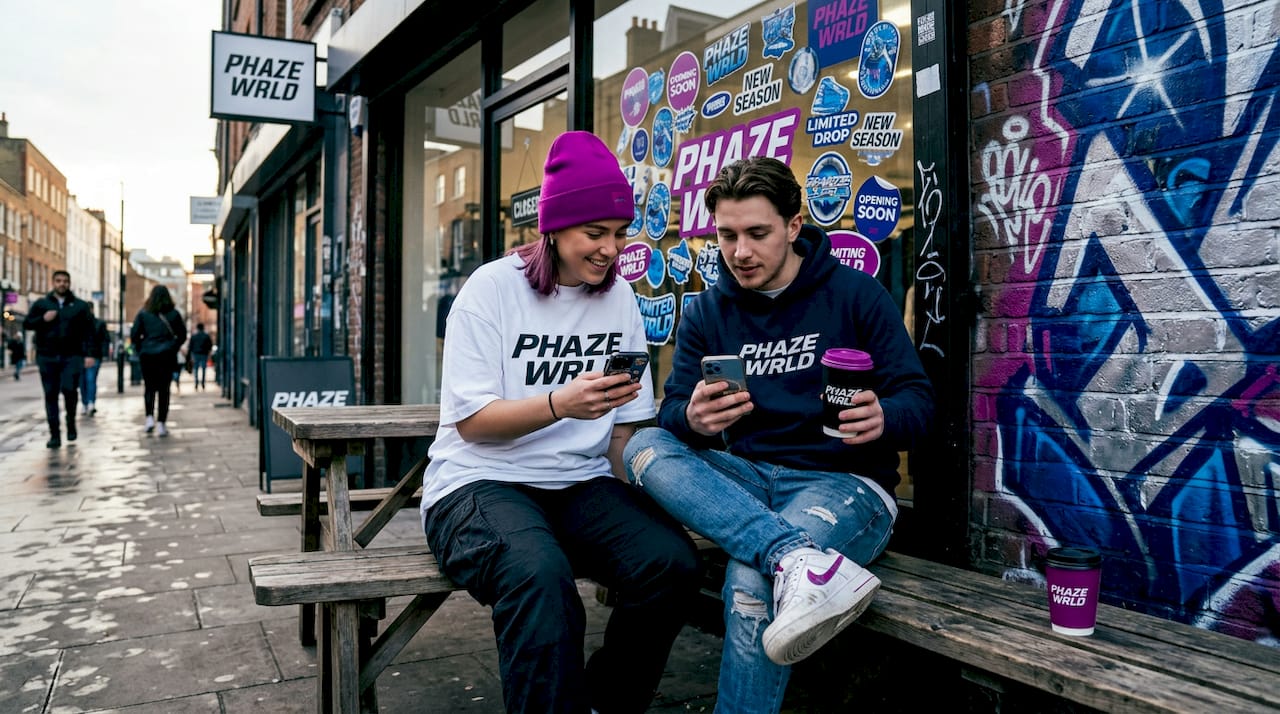
The psychology underneath all of this is straightforward. When something is hard to get, the community values it more. Ownership becomes a signal of being in the know, of being early, of belonging to a select group. That feeling is brand equity working at its most powerful level.
Social media, community, and values as brand equity drivers
The streetwear consumer has changed. Buying decisions today are shaped as much by what a brand stands for as by what it sells. Social media heavily influences 84% of streetwear buyers, and 70% say they prioritize brands that demonstrate social and environmental awareness. That is not a niche preference. That is the market.
Brands that understand this build equity through emotional and communal connections, not just product drops. The mechanisms they use include:
- Tiered loyalty programs: Programs like Nike SNKRS and Adidas adiClub grow predictable revenue by creating early access tiers that make members feel like insiders rather than customers. Status and belonging are the real rewards.
- Authentic community building: Brands that grow out of genuine subcultures, skating, graffiti, music, carry associations that manufactured brands cannot buy. Community origin stories are irreplaceable equity.
- Value-driven positioning: Taking public stances on social justice, sustainability, or mental health resonates with younger consumers who see their purchases as extensions of their identity and beliefs.
- Inclusive representation: Brands that speak to communities historically excluded from mainstream fashion build fierce loyalty precisely because that recognition feels rare and meaningful.
Pro Tip: Follow a brand’s social presence for 30 days before buying. If their content is all product promotion and no cultural conversation, their brand equity is shallow. Depth shows up in how a brand talks about the world, not just its next drop.
You can also look at how brands network through community events as a signal of genuine cultural investment. Brands that show up in physical spaces, not just digital feeds, tend to build the kind of trust that sustains long-term equity.
Risks and challenges to streetwear brand equity
Brand equity in streetwear is easier to lose than to build. The closer a brand gets to mainstream success, the more pressure it faces to scale, and scaling is where credibility dies. Overproduction risks dilution by undermining street credibility and making it nearly impossible to reclaim the exclusivity that defined the brand’s early appeal.
| Challenge | Risk to brand equity | What it looks like in practice |
|---|---|---|
| Overproduction | High | Items sitting on shelves, deep discounts, loss of sellout culture |
| Bad collaborations | Medium to high | Partnering with brands that clash with core audience values |
| Shifting demographics | Medium | Aging out of relevance without connecting to younger consumers |
| Sustainability backlash | Medium | Fast-fashion practices exposed by an increasingly values-conscious buyer base |
| Viral but shallow fame | Low to medium | Social media spike without community roots fades quickly |
The accessibility vs. exclusivity tension is the most difficult operational challenge any streetwear brand faces. Go too mainstream and you lose the credibility that made you cool. Stay too underground and you cannot sustain the business. There is no formula for getting this right. It requires constant calibration.
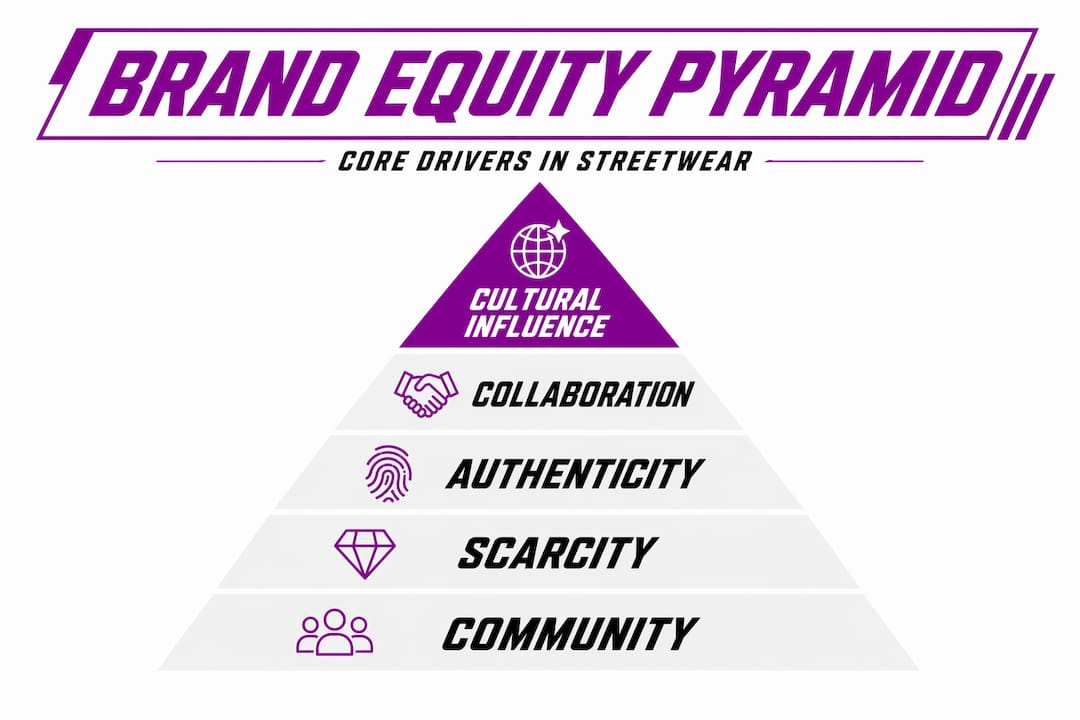
Collaborations add another layer of complexity. A well-executed collab transfers brand equity between partners and opens new audiences. A poorly chosen one can signal that a brand is chasing money rather than culture, which is a reputation that spreads fast in tight-knit streetwear communities. Luxury brands that collaborate with authentic streetwear labels tend to win younger consumers, but only when the cultural values actually align.
Sustainability is increasingly non-negotiable. Streetwear is shifting from pure hype toward durability and values-led consumption, meaning brands that ignore environmental responsibility are not just morally behind. They are strategically behind.
How to build and read brand equity in streetwear
Whether you are a consumer trying to spot real value or an emerging brand trying to build it, the principles are the same. Equity is built through consistency, authenticity, and cultural relevance, never through shortcuts.
For consumers evaluating a brand’s real equity:
- Look at the resale market. Secondary market prices are the most honest signal of perceived brand value. Premium resale means the market believes in the brand beyond retail pricing.
- Study the brand’s origin story. Does it come from a genuine subculture, or was it manufactured to look like one? Authenticity has a texture that reveals itself over time.
- Check community engagement. How does the brand’s audience talk about it? Genuine enthusiasm and organic advocacy are signs of strong brand loyalty in streetwear. Scripted-sounding endorsements are a red flag.
- Review the consistency of quality. Strong brand equity requires products that actually deliver. Read reviews across multiple drops, not just the most recent one.
- Assess the storytelling. Brands that articulate a clear cultural point of view and stick to it over years are building real equity. Brands that shift messaging with every trend cycle are building hype, not value.
For emerging brands, the most important asset is a genuine story. You can learn how online streetwear brands work from a structural standpoint, but what no guide can manufacture for you is authentic community connection. Start with a real cultural perspective. Build around people, not products. Let scarcity happen naturally at first, then make it intentional.
Pro Tip: Never discount to drive volume in streetwear. Discounting trains your community to wait for sales and signals that your full price was never justified. Once you go down that road, brand equity drops with every markdown.
My take on brand equity in streetwear culture
I have watched dozens of brands rise and fall in this space, and the pattern is almost always the same. A brand builds something genuinely rooted in a subculture, earns real loyalty, starts getting attention, then scales too fast trying to capture the moment. Within two years, the community that built them has moved on.
What most people miss is that brand equity in streetwear is not a marketing achievement. It is a cultural one. You cannot spend your way into credibility. You earn it through years of showing up consistently, putting out quality, taking actual stances, and treating your community like collaborators rather than consumers.
The contrarian take I hold is this: mass accessibility is not the enemy of brand equity if you earn it the right way. The brands that scare me are not the ones with large audiences. They are the ones that built large audiences before they had anything real to say. Scale built on hype alone is a ticking clock. Scale built on genuine cultural relevance is a foundation.
What the best streetwear brands have taught me is that brand loyalty is not something you program through points systems. It is something you earn through respect. If you treat your community like insiders, keep your word on quality, and stay consistent with your cultural message, equity compounds. That is the play, and it is slower and harder than anyone wants to hear.
— Phazewrld
Explore streetwear that actually means something
At Phazewrld, brand equity is not a marketing concept we talk about from the outside. It is something we build into every drop, every design choice, and every interaction with our community. We believe that streetwear with real cultural weight starts with product that earns its price point, whether that is a bold graphic tee or a heavyweight hoodie built to last through every season.
If you are ready to wear pieces that carry a real point of view, start with our streetwear t-shirts collection, which represents exactly the kind of accessible-yet-intentional drops we stand behind. Want to go deeper into the wardrobe? Explore our full range of men’s streetwear, streetwear hoodies, and streetwear sweatpants for pieces that reflect street credibility without compromising on comfort or quality. Join the Phazewrld community and get access to new drops before anyone else. Own the Streets. Define the Culture.
FAQ
What is brand equity in streetwear?
Brand equity in streetwear is the additional value a brand commands based on its cultural reputation, community trust, and perceived authenticity, beyond the physical product itself. It is why some labels command resale premiums while technically similar products go unsold.
How does scarcity affect brand equity in streetwear?
Scarcity directly strengthens brand equity by keeping demand above supply, which makes ownership feel meaningful and signals cultural status within the community. Palace and Supreme have built entire brand identities around deliberate supply limitation.
What influences brand equity the most in streetwear?
Cultural authenticity, community loyalty, consistent quality, and social values alignment are the primary drivers. 84% of streetwear buyers say social media influences their purchases, making how a brand presents itself online as critical as the product.
Can a brand lose its streetwear brand equity?
Yes, and it can happen quickly. Overproduction, shallow collaborations, or shifting away from authentic cultural roots can erode credibility that took years to build. Scaling too fast is the most common and most damaging mistake.
How do you measure brand equity in streetwear?
Look at resale market premiums, community engagement quality, brand loyalty indicators like repeat purchases and organic advocacy, and the strength of cultural associations the brand holds over time. These signals reveal far more than any sales figure alone.