

TL;DR:
- Puff print transforms basic garments into tactile, premium-looking streetwear pieces through raised, 3D graphics. The technique’s affordability and scalability make it ideal for small brands seeking bold, sensory designs that stand out socially and culturally. Its ability to balance softness, impact, and cost is reshaping streetwear production and consumer engagement in 2026.
A $10 blank tee. Add puff print, and it becomes a premium tactile piece that looks like it belongs in a limited drop selling out in minutes. That is the core reason why puff print trending streetwear conversations are everywhere right now. Flat graphics are no longer enough. The new generation of streetwear consumers wants clothes they can feel, not just see. Puff print delivers that sensory hit at a fraction of embroidery’s cost, and it is reshaping how brands design, produce, and sell. Here is everything you need to know about why this technique is taking over.
Table of Contents
- What is puff print and why is it popular in streetwear?
- How puff print disrupts streetwear production economics and scale
- Puff print versus other printing techniques: texture, design, and garment compatibility
- The cultural and aesthetic reasons behind puff print’s streetwear popularity in 2026
- Expert tips for designing and styling with puff print streetwear
- Why puff print is a revolution in streetwear texture, not just a fad
- Explore Phaze Wrld’s puff print streetwear collections
- Frequently asked questions
Key Takeaways
| Point | Details |
|---|---|
| Puff print basics | Puff print uses heat-activated ink additives to create raised, tactile designs that stand out visually and physically. |
| Cost and scalability | Puff print reduces production costs and allows small brands to produce limited-edition streetwear drops efficiently. |
| Design and garment fit | Best applied on heavyweight cotton with bold, simple graphics for premium, long-lasting tactile effects. |
| Cultural significance | The trend matches 2026’s maximalist printmaxxing and consumer desire for sensory fashion beyond visual appeal. |
| Practical styling tips | Combine puff and flat inks carefully, avoid light fabrics, and choose placements that maximize texture impact without distortion. |
What is puff print and why is it popular in streetwear?
Puff print is a variation of screen printing that uses a puff additive mixed into the ink. When heat is applied during curing, that additive expands and pushes the ink upward, creating a raised, three-dimensional surface on the fabric. The result is not just a graphic you see. It is one you can feel with your fingertips.
What makes this technique so well suited to streetwear is the attitude it carries. Bold logos, chunky lettering, and block shapes all benefit from the raised effect. Where photographic prints or fine gradients would lose detail in the expansion process, clean geometric graphics and oversized typography become more impactful. The puff literally gives your design presence.
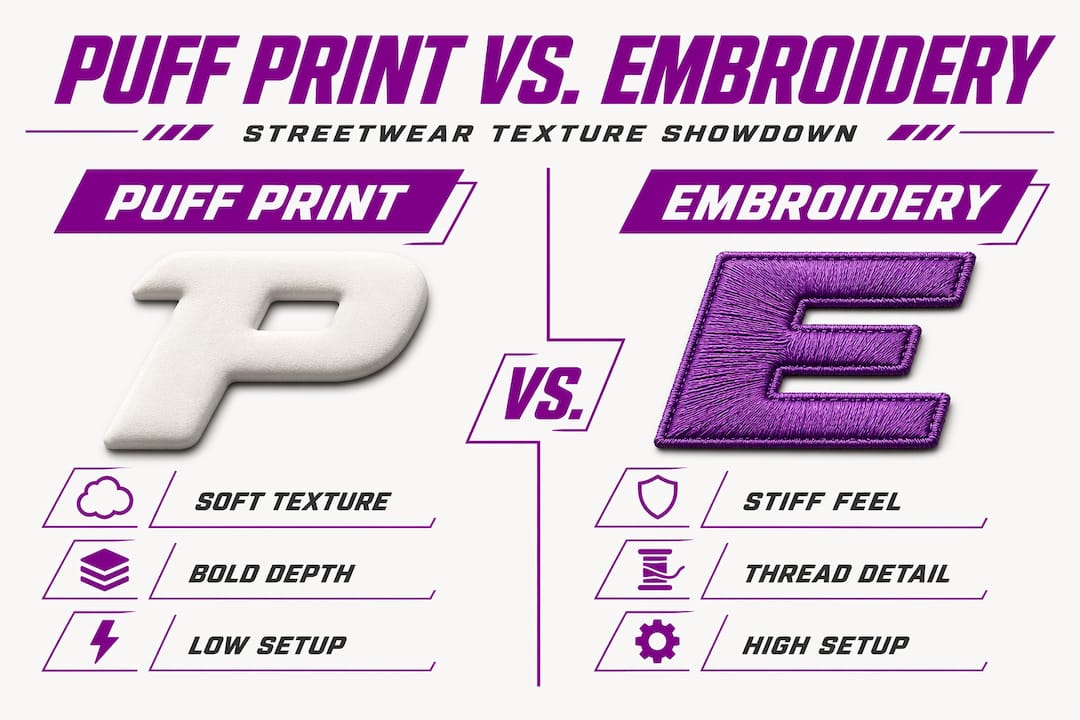
One of the lesser-known advantages is how different it feels compared to embroidery. Embroidery adds weight and stiffness to a garment. Puff print stays soft. You get visual depth and tactile interest without the boardlike feeling that embroidery can create on lighter fabric. For brands building around everyday wearability, that softness matters.
The economic angle is just as important. Puff print transforms a basic $10 blank into a premium tactile piece in 2026 streetwear without the overhead costs of digitizing files for embroidery or running large minimum orders. That accessibility has made it a go-to for independent streetwear brands launching small drops and testing designs before scaling.
Key reasons puff print works so well in streetwear:
- Adds visual weight and dimension to simple graphics
- Stays soft and flexible, unlike embroidery stitching
- Works well on bold, single-color or limited-color designs
- Accessible to small brands without large minimum orders
- Creates an instant premium perception on affordable blanks
Pro Tip: If you are designing for puff, size up your artwork slightly. The expansion of the ink fills out design edges, and a graphic that looks tight on screen often reads better at a slightly larger scale once the puff rises.
Now that you understand puff print basics, let’s explore why this technique is changing the costs and scale of streetwear production.
How puff print disrupts streetwear production economics and scale
The numbers behind puff print’s rise are striking. The puff DTF printing market grew from $1.25 billion in 2022 and is projected to reach $6.8 billion by 2030, with streetwear brands reporting 50% cost savings over embroidery on comparable pieces. That is not a minor efficiency gain. That is the difference between a brand that can afford to experiment and one that cannot.
Embroidery requires digitizing each design into a stitch file, setting up machines, and running a minimum quantity to justify setup costs. A small brand dropping a 30-unit capsule simply cannot absorb those numbers. Puff print removes that barrier. Small brands can produce limited batches under 100 units with low overhead, making exclusive drops genuinely achievable without sacrificing the premium feel that streetwear audiences expect.
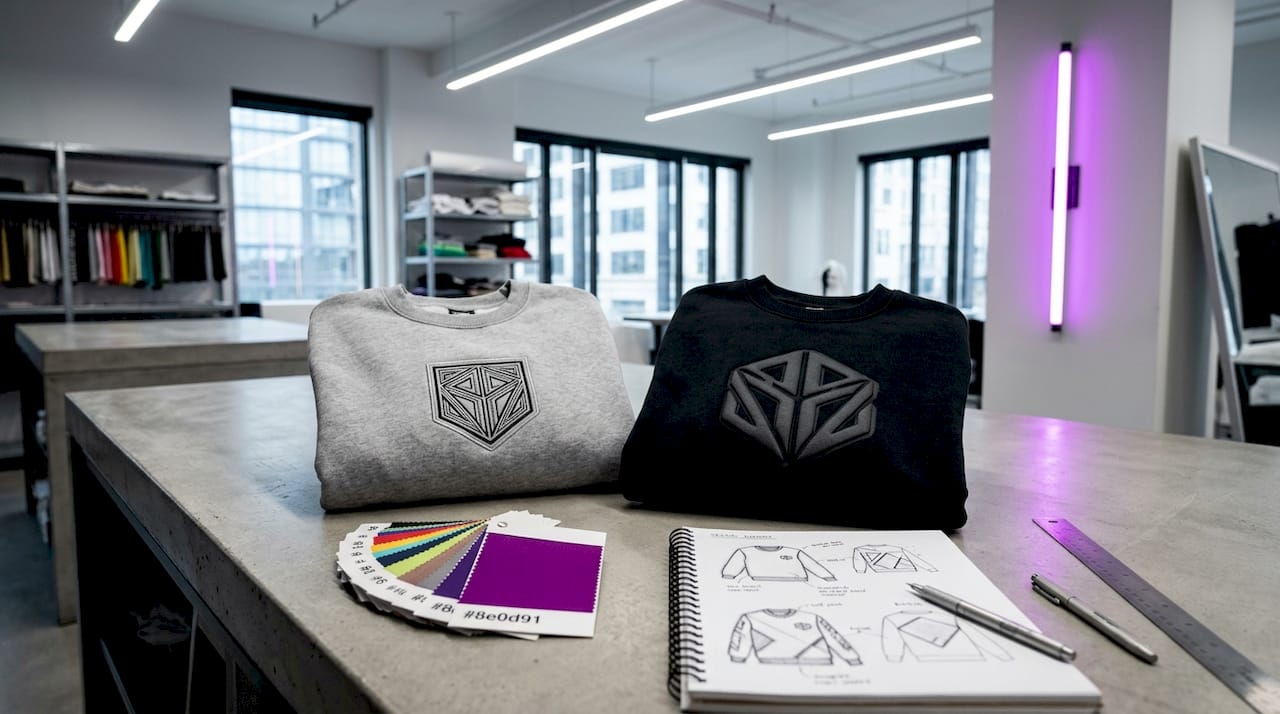
| Production method | Setup cost | Min order | Tactile effect | Best for |
|---|---|---|---|---|
| Puff screen print | Low | 12 to 24 units | 3D raised texture | Bold logos, lettering |
| Embroidery | High | 48 to 72 units | Stitched, stiff | Caps, structured pieces |
| Standard screen print | Medium | 24 units | Flat, smooth | Detailed multicolor art |
| DTF (flat) | Very low | 1 unit | Flat, photographic | Full-color, photo prints |
This scalability is doing something important for streetwear culture. It is leveling the playing field. A two-person brand can now create a 50-unit drop on an essential cotton boxy tee that feels and looks premium enough to compete with brands spending ten times more on production.
Pro Tip: Order a sample run of 12 units before committing to a full batch. Puff print behavior can vary slightly between ink suppliers and fabric weights, and catching any lift or distortion issues early saves both money and time.
With these economic advantages clear, let’s compare puff print to other common printing techniques in streetwear.
Puff print versus other printing techniques: texture, design, and garment compatibility
Not every printing method is equal, and knowing the differences will save you from a costly mistake when designing a drop. Puff print delivers tactile, dimensional texture that rewards bold, simple graphics, especially on heavyweight cotton. That dimensional quality is what separates it from flat printing in the way it reads both visually and physically.
Standard screen printing is the workhorse of streetwear. It offers sharp edges, consistent color, and repeatability across large runs. But it reads flat. There is no dimension. You see it, but you do not feel it in any meaningful way. Puff print gives a more tactile and directional feel than standard screen print, which favors clarity and repeatability over sensory impact.
Embroidery is the traditional way to add dimension to a garment, but it comes with trade-offs. Stitching creates a rigid texture that can feel scratchy, adds weight to thinner garments, and works best on small, contained areas like chest logos or hat patches. Puff print is softer and more graphic than embroidery and allows multi-color 3D gradients that are impossible to replicate in thread. For oversized back graphics or full-chest statements, puff wins on wearability every time.
| Technique | Texture feel | Design complexity | Ideal garment | Cost tier |
|---|---|---|---|---|
| Puff screen print | Soft, raised 3D | Bold and simple | Heavyweight cotton | Low to medium |
| Embroidery | Stiff, stitched | Small, detailed | Structured caps, heavy fabric | High |
| Standard screen print | Flat, smooth | High complexity | Any fabric weight | Medium |
| DTF transfer | Flat, slight sheen | Photographic detail | Light to medium fabric | Very low |
What works best with puff print:
- Block letters and oversized typography
- Clean brand logos without fine lines
- Geometric shapes and abstract patterns
- Single-color or two-color statements
- Chest prints and back graphics on retro boxy hoodies
Understanding these differences helps you appreciate why puff print fits current fashion and production needs so well.
The cultural and aesthetic reasons behind puff print’s streetwear popularity in 2026
Technique alone never makes a trend. Culture does. Puff print’s rise is inseparable from two major shifts happening in fashion right now: the death of quiet luxury and the demand for sensory clothing.
The printmaxxing trend encourages bold, pattern-driven self-expression, pushing back against the muted tones and logo minimalism of the quiet luxury era and driving puff print visibility across social media. Consumers do not want to blend in. They want to make a statement, and a flat print just does not carry the same visual weight as something that literally pops off the surface of a garment.
Social media is accelerating everything. TikTok and Instagram reward content that stops the scroll. Puff print does that. A graphic that catches light, casts a shadow, and shows texture on camera is far more compelling than a flat screen print in a flat lay photo. For streetwear brands building hype through social content, puff print is practically a visual strategy on its own.
There is also a deeper driver here. Consumers crave tactile apparel as a reaction to digital saturation, and puff prints “demand to be touched,” elevating the sensory experience of wearing a garment. People spend hours staring at screens. When they reach for clothing, the physical sensation of a raised graphic creates a kind of satisfaction that no flat print can match.
“Expression is the new luxury. Puff print is where that expression gets physical.”
Why puff print fits right now culturally:
- Maximalism is back, and loud textures fit the moment
- Tactile clothing provides physical engagement digital spaces cannot
- Social media rewards bold, dimensional visuals that photograph well
- Streetwear consumers identify through sensory details, not just logos
- An oversized boxy graphic tee with puff lettering becomes a wearable statement
Now that we have covered cultural drivers, let’s look at practical design strategies for using puff print well.
Expert tips for designing and styling with puff print streetwear
Knowing about puff print is one thing. Executing it well is another. Most brands that get puff print wrong do the same thing: they use it on designs that are too intricate or on fabrics that are too light.
- Test on heavyweight cotton first. Lightweight fabrics give unpredictable results. Dense cotton stabilizes the raised ink and keeps it sitting cleanly on the surface. Start there, always.
- Simplify your design. Bold geometric shapes and block letters maximize the puff effect. Thin lines and tight spacing can blur or merge after expansion. Less detail means more impact.
- Try a monochromatic palette. Monochromatic puff prints on heavier garments, especially in retro 90s styles, cast subtle shadows that give the design a premium, sculptural feel without needing multiple colors.
- Avoid placement near seams or structured panels. The fabric tension near seams resists expansion unevenly. Keep your puff graphics centered on flat panels where the ink can rise freely.
- Wash with care. Turn garments inside out, use cold water, and avoid high-heat drying. Proper care preserves the raised effect and extends the life of the print significantly.
Brands pair puff with non-puff inks on heavyweight cotton to avoid blob-like distortion common on lightweight fabrics, and the contrast between raised and flat elements within a single design creates genuine visual complexity. That technique is worth experimenting with. A puff logo surrounded by flat typography creates hierarchy and makes the key element pop even harder.
An oversized curved hoodie is one of the best canvases for this approach. The chest and back panels give you room to work with scale, and the heavier cotton weight ensures the puff holds its shape wash after wash.
Pro Tip: Mix puff ink with a glossy flat ink in the same design for a two-finish look. The contrast between the raised matte puff and a flat gloss element gives a single-color design the complexity of a multi-technique piece.
With these practical design ideas in mind, let’s consider a fresh perspective on why puff print is more than just a trend.
Why puff print is a revolution in streetwear texture, not just a fad
Here is the take that most trend roundups miss. Puff print is not popular because it looks cool on Instagram. It is popular because it solves a real problem that streetwear has been circling for years: how do you make clothes feel as meaningful as they look?
Flat screen printing made designs visible. Embroidery added permanence. But neither gave you that moment of connection when someone picks up a garment, runs a thumb across the graphic, and feels something. Puff print balances boldness with softness, allowing streetwear brands to communicate identity through touch and sight simultaneously. That is a new capability. And it is one that flat or stitched techniques simply cannot replicate.
There is also a strategic reality here. Small brands using Phaze Wrld’s model of limited drops and bold identity-driven design benefit enormously from a technique that is both affordable and visually arresting. You do not need a massive production budget to create something that feels premium. You need the right technique on the right fabric with the right design.
The brands that treat puff print as a gimmick will cycle off it when the next technique arrives. The ones that understand it as a tool for multisensory identity expression will keep using it, because the consumer desire it taps into is not going anywhere. People will always want to feel connected to what they wear.
Explore Phaze Wrld’s puff print streetwear collections
If everything above got you thinking about what puff print could do for your wardrobe, Phaze Wrld is already there. The brand builds its drops around exactly the principles covered here: bold designs, heavyweight cotton, tactile prints that reward being worn and not just photographed.
The oversized curved hoodie in Eden Green is a strong starting point if you want to experience what a well-executed puff print feels like in person. For something lighter, the boxy oversized t-shirt gives you the same premium tactile finish with a silhouette built for everyday wear. New drops land regularly. Free shipping kicks in on orders over $99. This is the puff print streetwear moment. Own it.
Frequently asked questions
What exactly is puff print in streetwear?
Puff print is a screen printing method that uses heat-reactive ink to create raised, three-dimensional graphics on garments, adding tactile texture and depth to designs. The puff additive expands with heat to create that raised, 3D surface that defines the technique.
Why is puff print preferred over embroidery for small streetwear brands?
Puff print offers similar 3D texture effects as embroidery but with a softer feel, lower setup costs, and better scalability for small batches. Small brands can produce limited batches under 100 units with low overhead, making it ideal for exclusive streetwear drops.
How does puff print support current streetwear style trends?
By adding bold, sensory textures aligned with maximalist printmaxxing trends, puff print helps streetwear consumers express individuality and stand out on social media. The printmaxxing trend boosts puff print visibility by rewarding bold, pattern-driven self-expression over quiet minimalism.
What types of garments work best with puff print?
Heavyweight cotton garments like thick t-shirts and hoodies are best because the dense fabric stabilizes the raised ink and enhances the premium tactile effect. On dense cotton, the raised ink sits cleanly and holds its shape over time, while lighter fabrics give less predictable results.