
HISTORY AND EVOLUTION OF GRAPHIC HOODIES
Written for Streetwear enthusiasts and fashion history buffs looking to understand the cultural roots and subcultural significance behind their favorite graphic hoodies.

How Did Graphic Hoodies Evolve Into Streetwear Icons?

Long before it became a staple of global streetwear, the hooded sweatshirt was born out of pure utility. Introduced in the 1930s by Champion, the garment was engineered to protect cold-storage warehouse laborers and outdoor athletes from freezing temperatures. It was a functional, blue-collar uniform made of thick, durable cotton, designed strictly to lock in heat. For decades, the hoodie remained confined to athletic fields and industrial job sites, unrecognized by the wider world of fashion.
By the 1970s, however, the blank canvas of the hoodie found a new home in the underground spaces of New York City and other urban centers. Emerging youth subcultures, particularly graffiti artists and breakdancers, adopted the heavy GSM brushback cotton garment for its practical anonymity and effortless cool. The spacious hood, which would later inspire the modern crop hoodie silhouette, offered a shield against the elements and local authorities, transforming the piece into a symbol of rebellion. Much like the design roots of other essential garments detailed in graphic tee culture explained, this athletic basic was repurposed into a uniform of defiance, setting the stage for the dramatic history and evolution of graphic hoodies. It became a powerful tool for self-expression, transitioning from cold storage to the pavement where it would forever alter the course of modern style.
The Collegiate Origins: Champion and the First Graphic Hoodies
Champion, originally founded as the Knickerbocker Knitting Company in 1919, invented the first hooded sweatshirt to protect athletes and laborers from freezing temperatures. The brand developed the heavy Cotton & The Power of GSM GSM cotton fleece garment with a hood to keep outdoor workers and collegiate athletes warm during training sessions. This functional design quickly caught the attention of sports programs across the United States. The University of Michigan became the first academic institution to partner with Champion for custom collegiate apparel. The university requested their team name and mascot, the Wolverines, to be printed directly onto the sweatshirts. This partnership birthed the very first graphic hoodies, transforming a purely utilitarian garment into a symbol of school pride and campus identity. Champion utilized flock printing technology to apply felt-like lettering, logos, and athletic Caps onto the heavy cotton fabric. This early graphic application allowed students and athletes to display their institutional affiliation. The trend rapidly spread to other Ivy League universities and high schools nationwide, establishing the hooded sweatshirt as a staple of American sportswear. Soon, students wore these graphic hoodies off the field, integrating them into everyday campus fashion and laying the groundwork for modern streetwear.
What Role Did Hip-Hop and Skate Culture Play in Hoodie History?
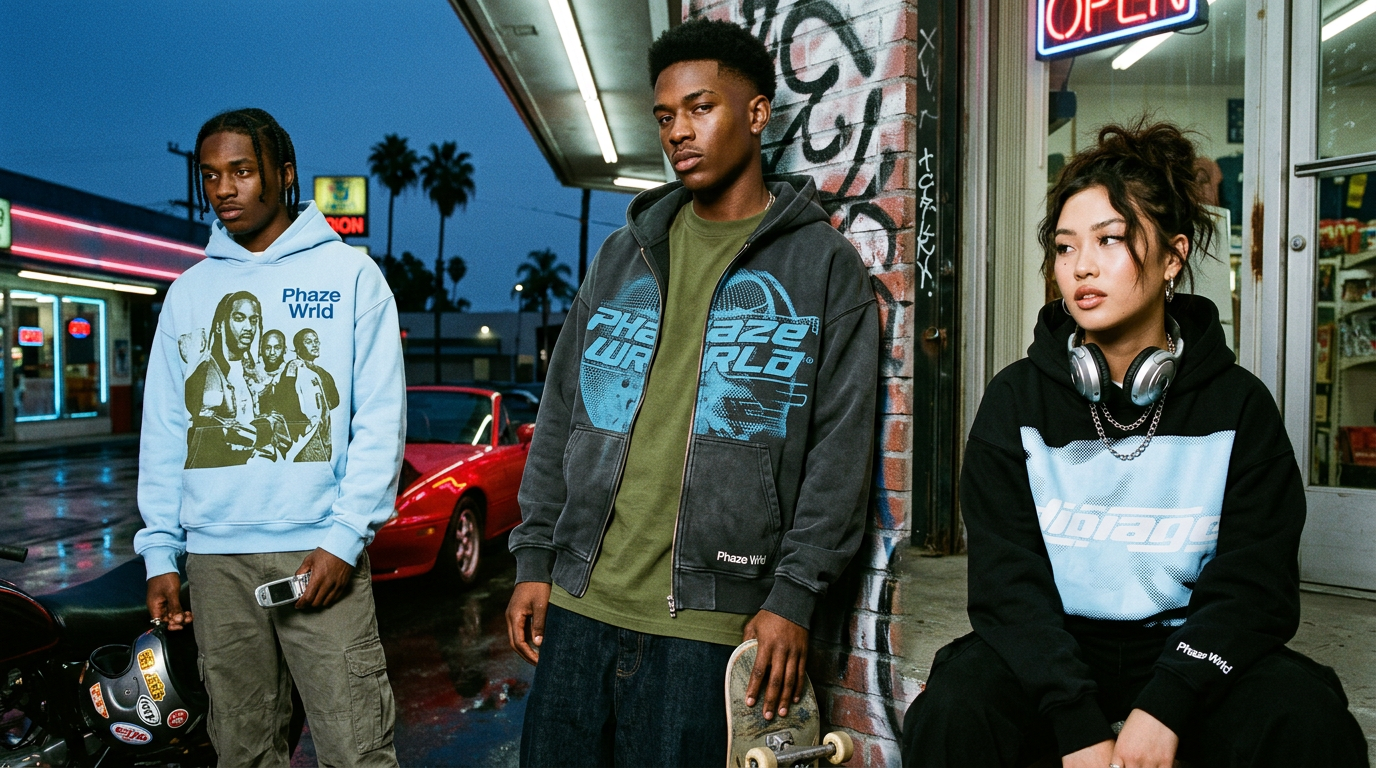
The 1980s and 1990s witnessed the true crystallization of the hoodie as a cultural billboard, driven entirely by the explosive growth of the skate subculture and the golden era of rap. On the West Coast, skaters adopted oversized, durable hoodies and streetwear headwear to withstand concrete slams, while East Coast artists embraced the garment to project power, solidarity, and street credibility. If you want to understand the hip-hop subcultural roots of contemporary urban fashion, you have to look at how these groups utilized the fabric to broadcast their identity and define classic hoodie style.
During this era, raw subcultural design replaced basic athletic branding. Brands began utilizing heavy graphic print techniques and screen printing to plaster bold, anti-establishment artwork, band logos, and skate graphics across chest panels. The iconic 90s boxy hoodies emerged during this time, featuring a dropped-shoulder silhouette and a wide, relaxed fit that allowed for maximum movement and effortless style. The garment became an essential medium for self-expression, signaling to the world exactly which crew, music scene, or skate spot you claimed. This rebellious period permanently cemented the graphic hoodie as a dominant force in youth culture.
Y2K Fashion and the Rise of Rhinestone Hoodies

At the turn of the millennium, the gritty aesthetics of the 1990s gave way to the flashy, futuristic, and unapologetic energy of Y2K fashion. The early 2000s completely redefined urban fashion, shifting the focus from underground anonymity to high-visibility luxury. This era of excess saw the rise of cyber grunge aesthetics and maximalist designs, where hoodies became glittering canvas pieces adorned with metallic foils, bold all-over prints, and shimmering embellishments.
The undisputed champions of this flashy era were rhinestone graphic hoodies, which combined the comfort of sportswear with the opulent look of the bling-era music videos. Pop stars and hip-hop icons proudly wore these glittering pieces, elevating the hoodie from a subcultural uniform to a global luxury status symbol and a central piece of their wardrobe. Today, the nostalgic value of Y2K designs and Tees ## continues to heavily influence modern streetwear drops, with designers constantly referencing the rhinestone-studded, cyber-infused styles of the early aughts to capture that distinct millennial energy.
Modern Graphic Hoodies: Heavyweight Cotton and Boxy Fits
Today, the modern streetwear landscape treats the hooded sweatshirt not just as a casual layer, but as a premium, structural art piece. The focus has shifted heavily toward high-end manufacturing, characterized by ultra-dense heavyweight cotton, rigid fits, and meticulously designed drop shoulders. If you are researching how to buy graphic hoodies that offer both longevity and the perfect aesthetic drape, you must prioritize pieces that feature high GSM fabric and an intentional, boxy fit that holds its shape.
Modern brands have elevated the graphic hoodie into a premium canvas by utilizing advanced printing techniques. Instead of simple flat graphics, contemporary drops feature heavy puff print, intricate embroidery, and high-density screen printing that give the artwork a striking tactile presence. With Boxy Hoodies The Definitive Boxy Hoodie This silhouette pairs perfectly with matching Sweatpants to capture the ultimate relaxed, structured look. This evolution represents a complete merging of high-fashion construction with authentic street-level heritage. Every release acts as a medium for visual culture, blending nostalgic references with futuristic ideas to create a garment that is as comfortable as it is artistically expressive.
Puff Print and Screen Printing Innovations
In the realm of modern streetwear, the visual impact of a design is deeply tied to its physical texture. The rise of puff print has revolutionized subcultural design by adding a dramatic, three-dimensional element to traditional graphics. By expanding under heat during the printing process, puff ink rises off the heavyweight cotton fabric, creating a touchable, raised texture that catches the light and adds structural depth to the garment.
This tactile evolution elevates the hoodie from a simple printed shirt to a premium piece of wearable art. Combined with high-density screen printing, these textured graphics ensure that the artwork doesn't just sit flat on the chest but actively interacts with the shape and movement of the body, offering a premium look that defines modern luxury streetwear. The PHAZEWRLD streetwear brand continues to lead this charge, using these advanced tactile processes to push the envelope of contemporary design.
Why Do Graphic Hoodies Remain Symbols of Self-Expression?
So, where does the graphic hoodie go from here? The future is all about pushing the limits of personal style and subcultural design. As we look ahead to 2026 and beyond, expect to see even more experimental graphic prints, sustainable heavyweight fabrics, and silhouettes that challenge the norm. Whether you're hunting for the perfect graphic hoodies to complete your fit or digging through archives for authentic vintage hoodies, the energy remains the same. The history and evolution of graphic hoodies proves that this garment will always adapt to the culture that wears it. It will continue to be a go-to canvas for identity, a tool for self-expression, and a middle finger to conformity. With T-Shirts Worldwide experiencing a similar artistic renaissance, keeping your rotation fresh is easier than ever; respect the roots, and always go for pieces that hit different. The legacy of the hoodie is still being written, and you're the one wearing it on the streets.
Vintage Graphic Hoodies and Nostalgic Subcultural Design
While technology pushes printing techniques forward, the allure of vintage washes keeps modern streetwear grounded in history. These specialized washing processes—such as acid washing, pigment dyeing, and enzyme distressing—mimic decades of natural wear, giving brand-new heavyweight cotton a soft, lived-in feel and a beautifully faded color palette.
This weathered look bridges the gap between old-school nostalgia and modern luxury. A vintage-washed hoodie from our latest collection carries an effortless, relaxed vibe that feels immediately broken-in and authentic. It honors the rich legacy of vintage graphic hoodies and classic t-shirts from past decades, proving that the most forward-thinking designs often draw their strength from the deeply weathered textures of the past.
Frequently asked questions
What is the history of graphic hoodies in fashion and streetwear culture?
How did hoodies evolve from functional workwear to graphic streetwear staples?
When did designers start using hoodies as a canvas for bold graphics and logos?
What role did hip-hop and skate culture play in the rise of graphic hoodies?
How did university and college logo hoodies influence the evolution of graphic hoodies?
What are the key milestones in the timeline of graphic hoodies from the 1930s to today?
Why did graphic hoodies become symbols of identity, rebellion, and self-expression?
How did printing technology and screen printing innovations impact the popularity of graphic hoodies?
What is the difference between early plain hoodies and modern graphic hoodies in terms of design and cultural meaning?
Which brands were most influential in popularizing graphic hoodies in the 1990s and 2000s?
How did collaborations between streetwear brands and pop culture franchises shape graphic hoodie design?
Is the term “hoodie” itself a recent invention, and how did its usage spread in relation to graphic styles?
How have graphic hoodies been perceived in media and society over time (e.g., controversy, stereotypes, acceptance)?
What are the main design trends in graphic hoodies today compared to their early streetwear origins?
What should I look for when buying a graphic hoodie that has authentic or historically inspired designs?
Which materials and printing methods produce the most durable and high-quality graphic hoodies?
Can graphic hoodies be considered a form of wearable art, and how has that idea evolved?
Where can I find graphic hoodies that reflect classic streetwear eras like the 90s and early 2000s?
How does the history and evolution of graphic hoodies influence the market value of premium streetwear brands today?
How can fashion collectors trace the History and Evolution of Graphic Hoodies to identify authentic vintage pieces?
Discover more from Phaze Wrld
Hand-picked guides and drops, delivered occasionally.
Explore the collection